From Shevchenko to Boninsegna, the 12th edition of the Hall of Fame welcomes six new stars. Spalletti: “An award that lasts a lifetime.”
Six new legends are welcomed to the Hall of Fame: in alphabetical order, Boninsegna, Braida, De Rossi, Giacinti, Shevchenko, and Spalletti. A glittering sky in Coverciano, at the heart of Italian football, in memory of three great figures of the sport, Di Bartolomei, D’Amico, and Scopigno, and thanks to the award named after Davide Astori, presented to Santo Rullo for his “Crazy for Football” project.
An emotional evening with plenty of surreal moments and nostalgic smiles. The 12th edition of the Hall of Fame featured a ceremony full of emotions, as the six new stars of Italian football were called onto the stage of the Coverciano auditorium: national team coach Luciano Spalletti; 2006 World Cup winner Daniele De Rossi; 2004 Ballon d’Or winner Andriy Shevchenko; AC Milan’s former sporting director Ariedo Braida; 1970 World Cup runner-up Roberto Boninsegna; and Italy international Valentina Giacinti.
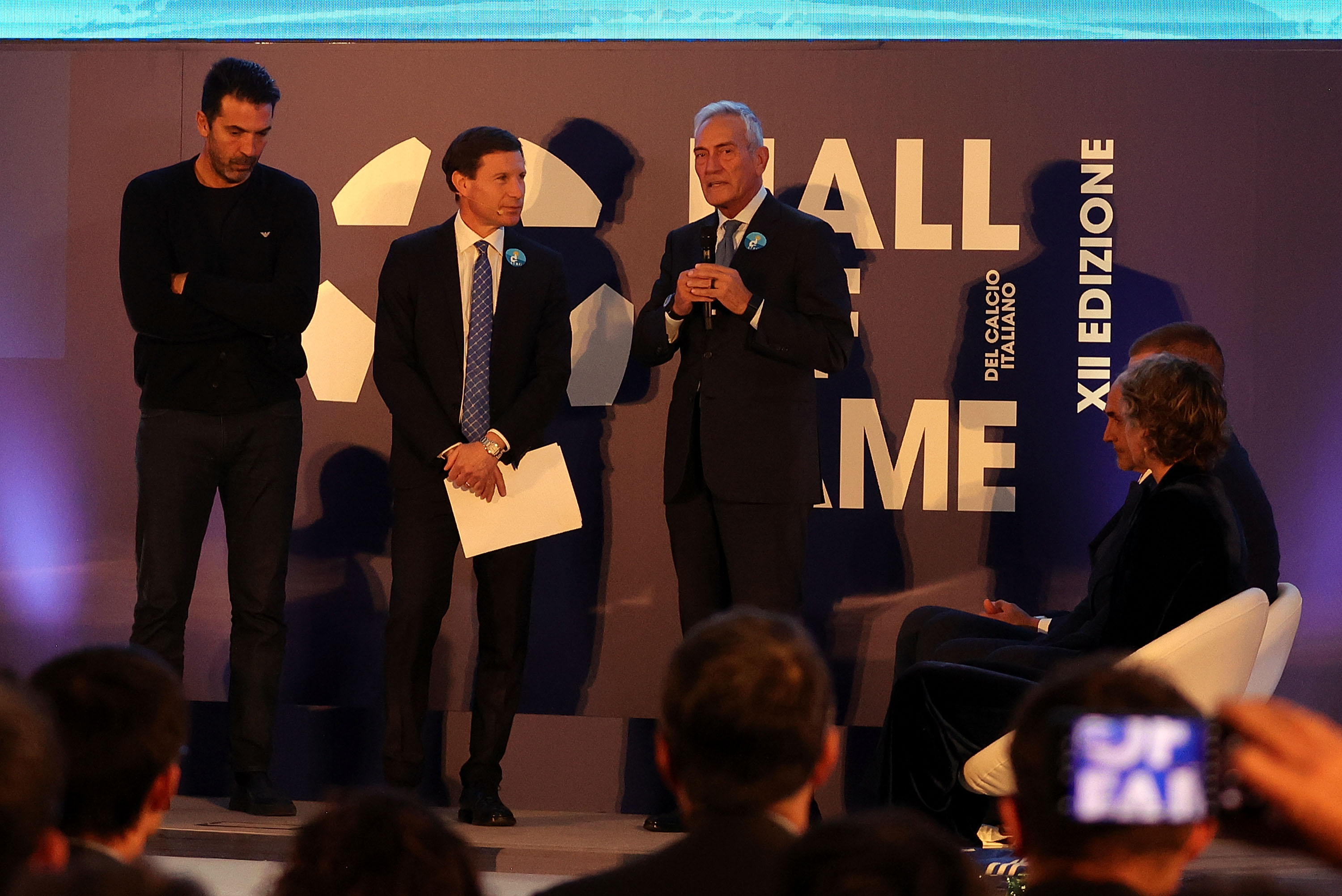
FIGC President Gabriele Gravina commented, “It is a great source of pride to present these awards to such extraordinary figures. The Hall of Fame is a symbol of love and admiration for those who have shaped the history of Italian football: we celebrate their example, which is more than simply the technical side of things.”
Head of Delegation Gianluigi Buffo added, “It is a beautiful evening. To understand how to shape our future, we must understand the past. This strengthens our sense of belonging, which in sport can make all the difference.”
The awards
After the opening welcome from the “hosts”: FIGC president Gabriele Gravina and national team delegation head Gianluigi Buffon, the awards ceremony began, broadcast live on RaiSport and presented by Alberto Rimedio. All six new stars of Italian football were present on stage, seated together in what was a legendary gathering.
The first to be honoured was 2006 World Cup winner Daniele De Rossi, inducted into the Italian Football Hall of Fame in the “player” category.
De Rossi recalled being 22 and in the penalty shootout in the 2006 World Cup final against France, “The penalty in the final? I was pretty calm going up to take it. I will always be grateful to Marcello Lippi, not only for the triumph, but also for the spectacular journey we had.”
Next was coach Luciano Spalletti, who showed the four memorabilia items donated to the Football Museum for the occasion, including a train conductor’s whistle he used to lead training sessions. He joked, explaining, “I used this because I used to say we had to move like trains. To understand the gravity of this award, you just have to take one look at the people with whom I am sharing this evening. When you dedicate your entire life to a profession, you end up asking yourself whether it was worth it. This recognition gives the answer: absolutely yes.”
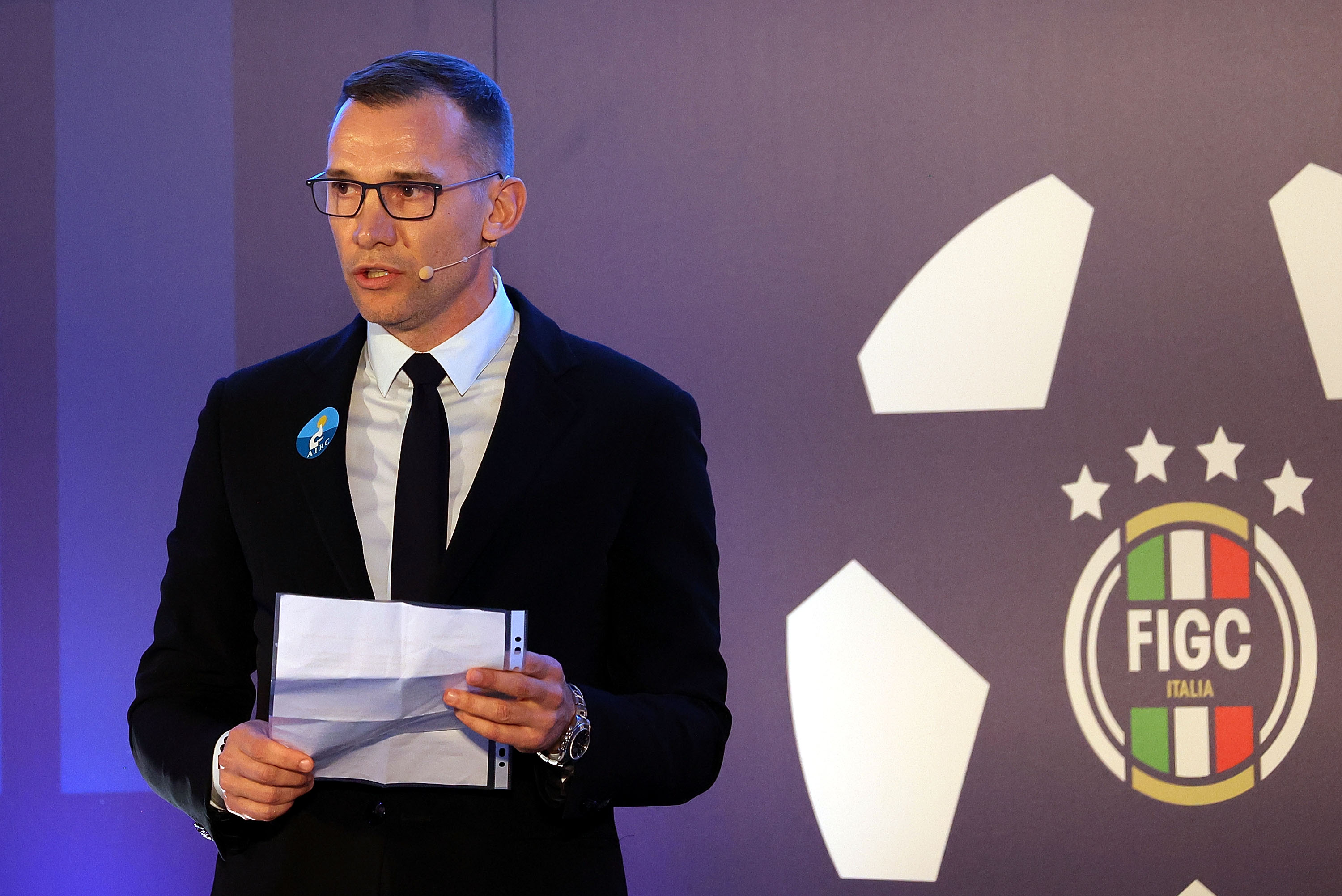
Emotion filled the auditorium when Andriy Shevchenko was announced. The current president of the Ukrainian Football Federation first thanked “President Gravina for allowing Ukrainian children to come to Coverciano, this wonderful facility,” before reading a letter he had written: “Dear Calcio…” he began, his voice full of emotion, concluding: “Being inducted into the Hall of Fame is an enormous privilege. Italy, I love you.”
The director who brought Shevchenko to Italy and AC Milan, Ariedo Braida, then spoke: “Of course, in football algorithms always work, but players have a heart, and Sheva truly moved me tonight. I am proud to have brought him to Milan. Thank you, Shevchenko.”
The two also recalled how Braida once brought a Rossoneri shirt to the Ukrainian striker to convince him to move to Italy: “Do you want to win the Ballon d’Or? Then this is the right shirt for you.” And indeed, in 2004, Shevchenko went on to win it.
The night celebrating strikers continued with the Italy forward Valentina Giacinti: “Even as a child, my dream was to become a striker for the national team and wear the number 9 shirt, like Bobo Vieri, who I watched on TV. The goal I scored at the 2019 World Cup against China was the most emotional moment of my Italy career.”
Then came Boninsegna, who looked back at the 1970 World Cup final against Brazil’s Pelé: “At halftime we still had faith, but we were exhausted, we had just come from the historic semifinal against Germany…”
Memorial awards and the Davide Astori prize
After the six new Hall of Fame inductees, it was time for the memorial recognitions, honouring three icons of Italian football from the past: Agostino Di Bartolomei, Vincenzo D’Amico, and Manlio Scopigno.
Luca Di Bartolomei, Agostino’s son, spoke about the emotion of sharing the stage “with Vincenzo D’Amico’s family: it really moves me.” Simona D’Amico, Vincenzo’s wife, highlighted how “Lazio represented a pure love for him.” Fabrizio Formichetti, president of the Scopigno Cup and of the award dedicated to Manlio Scopigno, added that the Cagliari coach who won the Scudetto “transformed football through his ideas, such as the attacking full-back role: he was a true innovator.”
Then it was time for the Davide Astori award, presented to Santo Rullo for the “Crazy for Football” project and the creation of a national team for people with mental health conditions. He said: “Pasolini once said football may be the opium of the people, but opium is also a form of therapy. Football, therefore, carries great responsibility. When our players take the field, they become footballers.”
President Gravina highlighted: “There is nothing like football, and because of its unique ability to move people, it is a powerful vehicle for inclusion.”
The evening came to an end with words from Matteo Marani, president of the Football Museum Foundation: “The Coverciano museum collects the greatest chapters of Italian football, starting from its historic triumphs. All the great figures of our game are here, and the difficulty in choosing who enters the Hall of Fame is itself a symbol of the beauty of our football.”
Italian Football Hall of Fame – 12th edition winners
Italian Player: Daniele De Rossi
Coach: Luciano Spalletti
Foreign Player: Andriy Shevchenko
Female Player: Valentina Giacinti
Veteran: Roberto Boninsegna
Executive: Ariedo Braida
Memorial Awards: Agostino Di Bartolomei, Vincenzo D’Amico, Manlio Scopigno
Davide Astori Award: Santo Rullo for the “Crazy for Football” project