

PHOTO
The FIGC has published its 2025 Activity Report on its official website. Introduced in 2015, the annual reporting process aims to strengthen transparency and provide an account of the Federation’s activities for all internal and external stakeholders.
The report brings together dedicated Activity Reports prepared by the Federation’s various functional areas. It forms part of a broader programme aimed at achieving good governance and fostering ongoing dialogue between departments and functions. The various federal offices regularly share summaries of their activities, which are brought together in the final document.
The Management Report serves as a tool for reviewing, monitoring and aligning management and administrative results with the policy guidelines set by the federal bodies and the Federation’s corporate strategies. To ensure operational transparency, the FIGC makes all its key reference documents available through additional publications, some of which are also published in English, on its official website under the ‘Federazione Trasparente’ section. These include the Social Report and Integrated Report, the federal budget and annual financial statements, as well as ReportCalcio, the Economic Report on Italian Football, and numerous other documents outlining the distinctive features and key aspects of the Federation’s management model and strategy.
BACKGROUND. The Federation’s work has been characterised by a commitment to enhancing and developing its potential across the sporting, commercial, institutional, and social spheres, while pursuing good management objectives. Its ultimate aim is to provide high-quality services in line with its institutional remit and deliver the best possible sporting, organisational, and financial results. In 2025, the main projects approved by the federal governing bodies continued to focus on implementing programmes to ensure the sustainability of the football system at every level. These included targeted regulatory measures and the continuation of a major strategic programme of financial support for clubs and federal stakeholders. Overall, the so-called ‘service policy’ for 2025 was worth more than €30 million. The FIGC’s support therefore focused on long-term financial sustainability and protecting youth and amateur football through structural reforms and direct funding. Throughout 2025, the Federation’s stakeholders also addressed several pressing issues affecting Italian football through the ‘permanent round table’. Discussions covered sustainability in its broadest sense, including financial and economic stability, measures to encourage new investment and strengthen clubs’ capital bases, increased management training, a review of refereeing services, and a new organisational structure for elite referees, aimed at enhancing their work and promoting greater professionalism. The Federation sought to provide concrete answers to the system’s most urgent needs, which require broad agreement across the football community to protect fair competition and the value of the leagues. Alongside measures to safeguard the financial stability of professional clubs, including incentives for youth development, a strengthened labour cost indicator, and additional guarantees, support for the grassroots game was provided through a review of training compensation and technical training award mechanisms for young players. These continued to be monitored and refined through regulatory improvements in 2025, alongside the introduction of new technological tools, such as the dedicated Awards Portal. Overall, the consolidation of the significant financial and economic results achieved by the Federation in recent years enabled the FIGC to continue funding investment in programmes designed to enhance its strategic assets in 2025. This was achieved with support from Sport e Salute SpA and international football organisations FIFA and UEFA for specific targeted projects.
NATIONAL TEAMS. For Club Italia, 2025 was a year of continuity in National Team activities, with 248 events held compared with 236 in the previous year. On the sporting front, the senior men’s National Team took part in the inaugural UEFA Nations League quarter-finals in March. From June onwards, the team began its qualifying campaign for the FIFA World Cup 2026. This was followed by defeat in the play-offs at the end of March 2026, resulting in Italy missing out on a third consecutive World Cup. The year also brought notable achievements for the men’s and women’s youth teams and the senior men’s Beach Soccer National Team. Here is a closer look:
- The Under-21 National Team qualified for the UEFA European Under-21 Championship finals in Slovakia, reaching the quarter-finals.
- The men’s Under-20 National Team once again reached the FIFA U-20 World Cup finals, held in Chile.
- The men’s Under-17 National Team reached the semi-finals of the UEFA European Under-17 Championship and secured historic qualification for the FIFA U-18 World Cup, held in Qatar in November, where they finished third.
- The senior women’s National Team enjoyed an outstanding UEFA Women’s EURO campaign in July. After navigating a challenging group and defeating Norway in the quarter-finals, Italy were eliminated only by eventual champions England, conceding in the closing minutes of extra time in a thrilling semi-final.
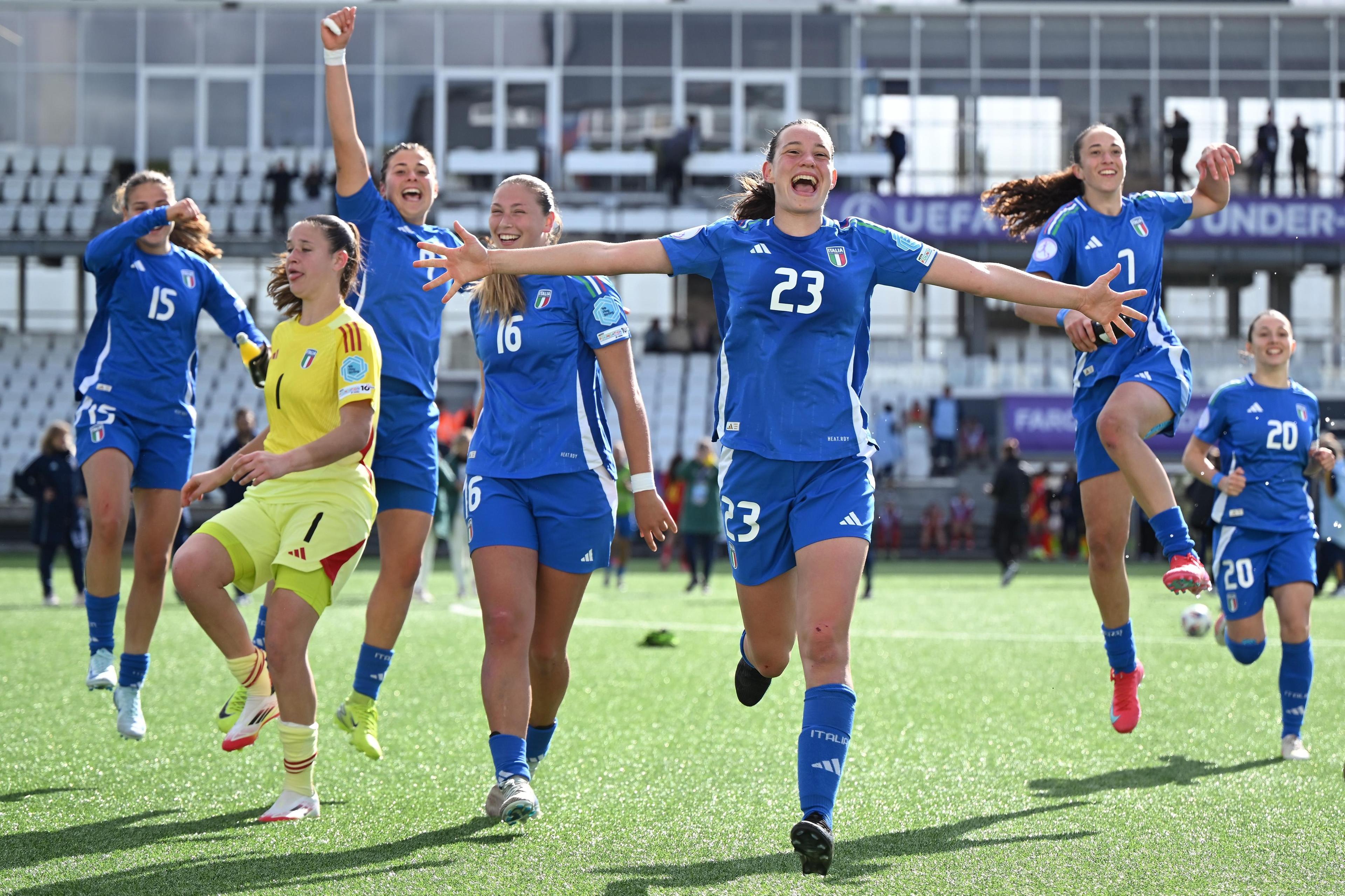
- Among the women’s youth teams, both the Under-19 and Under-17 sides qualified for their respective World Cups. The Under-17 team reached the semi-finals of the UEFA European Under-17 Championship in the Faroe Islands before progressing to the quarter-finals of the FIFA U-17 Women’s World Cup in Morocco. The Under-19 National Team also reached the semi-finals of the UEFA European Under-19 Championship in July.
ORGANISATION AND PROCESS INNOVATION. In 2025, the FIGC stepped up its efforts to improve the efficiency of its institutional operations and modernise the processes supporting them. The focus was increasingly on digital transformation and data centralisation, with the aim of reducing bureaucracy for clubs and making decision-making and oversight processes more transparent. The Federation completed the transition to fully digital management of its relations with clubs. Two key developments stand out:
- Qualified Electronic Signature (QES): this became mandatory for submitting contracts, bank guarantees, and certificates of enforceability, eliminating paper-based procedures and ensuring document integrity during league registration.
- Traceable Payments: the integration of digital payment systems simplified the settlement of affiliation fees and training awards, reducing administrative processing times. The full implementation of the new Awards Portal. The new platform, which continues to be improved, enables all clubs to view any training compensation and/or technical training awards owed to them, or payable by them under the applicable federal regulations, in real time. Clubs can also obtain the relevant certificates to initiate payment procedures and communicate electronically with the bodies responsible for resolving any disputes. Data and performance at the centre of operations (Big Data). Innovation has also reached the technical heart of Coverciano.
- Data-Driven Scouting: The use of algorithms and big data to monitor National Team performances has been further consolidated. The FIGC has invested in proprietary software to cross-reference the physical and technical data of registered players of all ages, in strict compliance with regulations governing the processing of sensitive data.
- Coverciano 3.0: The Technical Centre has been transformed into a highly connected technology hub for the remote training and professional development of coaches and club officials, making continuing education more accessible across all categories relevant to the Federation’s activities.
Integrated reporting and transparency
- Sostenabilia: As detailed later in this report, this digital multimedia platform was launched by the FIGC at the end of 2024 to collect and promote social and environmental sustainability initiatives across football. It quickly became the Federation’s official tool for transparently reporting progress towards the 66 targets set out in the Sustainability Strategy 2030, making the Federation’s data accessible to fans and stakeholders in real time.
WOMEN’S FOOTBALL. 2025 was a pivotal year for the growth of women’s football in Italy. Structural reforms, including changes to the league formats, were accompanied by a sharp increase in participation and media interest, culminating in the senior women’s National Team’s outstanding performance at UEFA Women’s EURO 2025. In particular, for the 2025-26 season, the Federal Council approved a major reform of the competitions to increase competitiveness and broaden the professional game:
- Serie A expanded from ten to twelve participating teams.
- New format: The two-phase system was replaced by a single round-robin league, with 22 matchdays in total.
- Serie B restructured: The division was reduced to 14 teams to consolidate its technical standard. Women’s football is also experiencing unprecedented growth:
- Registered players: The number of registered female players in 2025 approached 50,000.
- Attendances and media: Serie A attendances increased by 62%, while the 2025 European Championship semi-final attracted peak television audiences of 4.08 million viewers.
- Economic value: According to recent studies, the women’s football sector now generates an estimated €3.2 billion in GDP, benefiting the Italian economy. In terms of external financial support, the FIGC welcomed the extension into 2025 of the public fund supporting the transition to professional status, which helps clubs develop their activities. Finally, further evidence of the growing importance of women’s football came from the UEFA benefits paid in connection with the Women’s EURO 2025. These payments to players participating in the tournament reached a record total of €9 million for European clubs, including the pro-rata share allocated to Italian clubs.
TRANSPARENCY. The Federation strengthened its communication and transparency efforts through the publication of strategic documents, social campaigns and regulatory reforms designed to make its dealings with registered members and stakeholders clearer. In particular, the FIGC continued to expand its comprehensive reporting of activities, used its media platform to promote ethical values and enhanced its digital tools to improve access to information. This included further development of the platform used to manage registrations, payments, and training courses, making administrative processes more transparent, traceable, and efficient.

COMMERCIAL DEVELOPMENT. The FIGC’s commercial development in 2025 increased the visibility of partner brands despite a complex regulatory and competitive environment. In recent years, the Federation has pursued a strategy to maximise its commercial potential by bringing several key processes in-house. These include partnership sales, account management, visibility monitoring, television rights management (except for those marketed centrally by UEFA), editorial content production, business event organisation, and the activities of the e-National Teams. This process of bringing operations in-house has generated significant and sustained growth in commercial revenue, with an even greater impact when income from technical sponsor adidas is included. Notably, even in a year without a major tournament for the senior men’s National Team, the final royalties earned by the Federation from worldwide sales of Italian National Team merchandise significantly exceeded the contractual minimum guarantee. The main operational areas relating to club youth football and school football focus on promoting, organising, and developing sporting and educational activities for young male and female players throughout Italy.
YOUTH FOOTBALL. In 2025, the FIGC Youth and School Sector (SGS) focused on three main pillars, aimed not only at developing the technical skills of approximately 900,000 registered young players, but also at safeguarding them and supporting their education. The Youth Championships represent the highest technical level of youth football in Italy. During the season, 98 clubs took part: 97 professional clubs from Serie A, Serie B, and Serie C, alongside the San Marino Academy. The seven championships organised and managed entirely by the SGS involved 299 teams and a total of 7,400 players across the Under-15 to Under-18 categories. Alongside sporting and technical activities, education and training remain central. These are most fully expressed through the Youth and School Sector’s Evolution Programme, whose primary objective is to establish a technical, sporting, and educational development pathway for local communities and everyone involved in the growth of young male and female players, including technical staff, club officials, coaches, and parents. More broadly, the Territorial Development Programme promotes a new approach and methodology designed to create an environment in which every player can fulfil their potential. As in previous years, considerable effort was devoted to developing football in schools. This work was supported by the ongoing promotion of the initiative by technical staff provided by the Youth and School Sector and through the ‘Valori in Rete’ portal, which has brought together the full range of educational programmes specifically designed for schools of all levels throughout Italy for more than ten years. In 2025, the Federation also continued its reorganisation of the technical development structure for Italian youth football, with the support of a major external adviser. The process focused on improving coordination and strengthening synergies between the activities assigned to the Youth and School Sector, the Technical Sector, and Club Italia.

REFEREEING SYSTEM. Efforts to strengthen the refereeing system in 2025 focused on streamlining and optimising processes to improve the cost efficiency of an inherently complex organisational structure, without compromising transparency, the recruitment of young referees, or the Federation’s growing commitment to social initiatives. The year saw an intensive programme of institutional and technical activities, including training camps, collective sessions, training courses, management meetings, and development initiatives scheduled throughout the year. Courses were also organised across Italy, attracting significant numbers of new referees. The Refereeing Technical Sector, which oversees the training and technical development of referees, assistant referees, observers, and technical instructors, and promotes knowledge and correct application of the Laws of the Game, provided ongoing support to local sections, regional and provincial committees, and national technical bodies through participation in meetings and training camps. As part of its activities, the sector organised five training programmes. Some were aimed at Talent & Mentor participants under the UEFA Referee Convention project, which forms part of the UEFA HatTrick funding programme. Others targeted members of the various modules to ensure continuous, widespread training. The Federation also launched a post-career support project for referees, assistant referees, and VMO officials willing to continue their educational and promotional activities within the AIA. In addition, work began on examining a transition pathway towards full-time professional status for elite referees in Serie A and Serie B. Two options are being considered: the creation of a dedicated independent company modelled on England’s PGMOL (Professional Game Match Officials Limited), or an alternative structure operating within the current statutory framework. In either case, the aim is to have the new arrangement operational from the 2026-27 sporting season. Another particularly positive development has been the reversal of the upward trend in costs associated with referee appointments, assessments, and training camps at all levels. This improvement began to emerge during the first two quarters of the 2025-26 sporting season, following specific instructions issued by the AIA leadership to technical bodies across all categories at the express request of the Federation’s senior management. The hope is that this trend will be consolidated and strengthened in 2026 and subsequent seasons, a necessary step towards completing the broader process of reducing refereeing costs outlined above.
REGULATORY AND GOVERNANCE FRAMEWORK. In 2025, regulatory activity was characterised by a substantial review of oversight systems and targeted reforms designed to balance clubs’ financial stability with the protection of players’ rights. Alongside revisions to the National Licensing system and the rules governing interim financial checks on clubs, including the sanctions for non-compliance set out in Title VI of the NOIF, the Federation implemented changes in accordance with the legislation in force. The transfer of oversight responsibilities from the Commission for the Supervision of Professional Football Clubs (Co.Vi.So.C.) to the Independent Commission for the Verification of the Economic and Financial Stability of Professional Clubs also became fully operational in 2025. The new commission assumed responsibility for these checks on 1 October 2025. At this stage, the transfer has not had a significant impact on the costs previously incurred by the Federation to operate the secretariat supporting its oversight bodies, as legislation requires the FIGC to continue covering the costs of federal staff seconded to the newly established commission. However, implementation of the legal provision under Decree 71/24, which requires the operating costs of the commission to be covered by contributions from the sports federations subject to its oversight (football and basketball) has been postponed by one year. The Federation also introduced important amendments to its internal organisational regulations (NOIF) concerning player registration and apprenticeship contracts. Following constructive discussions with the Italian Competition Authority, which had raised concerns about the legality of the existing rule in relation to the principle of free movement of workers, the so-called ‘authority contract’ was substantially revised. From 1 July 2025, it was replaced by a mechanism allowing players and clubs to agree in advance on granting the club an option to convert a voluntary registration into an apprenticeship contract at specified dates.
SUSTAINABILITY. In its social responsibility activities, the FIGC has always been mindful of the environment in which it operates, recognising its responsibilities towards its stakeholders and Italian society as a whole. Social responsibility and sustainability policies are priorities within the Federation’s strategy. The launch of new sections on its website is intended to make the related development and promotional activities more visible and accessible to everyone. In particular, the previously mentioned Sostenabilia project, officially launched by the Federation at the end of 2024 and further established throughout 2025, is a multimedia platform dedicated to collecting and promoting all the FIGC’s social and environmental sustainability initiatives. The main activities carried out under the project in 2025 included:
- Sostenabilia.it platform: A single digital hub for monitoring the 66 measurable targets set out in the Sustainability Strategy 2030.
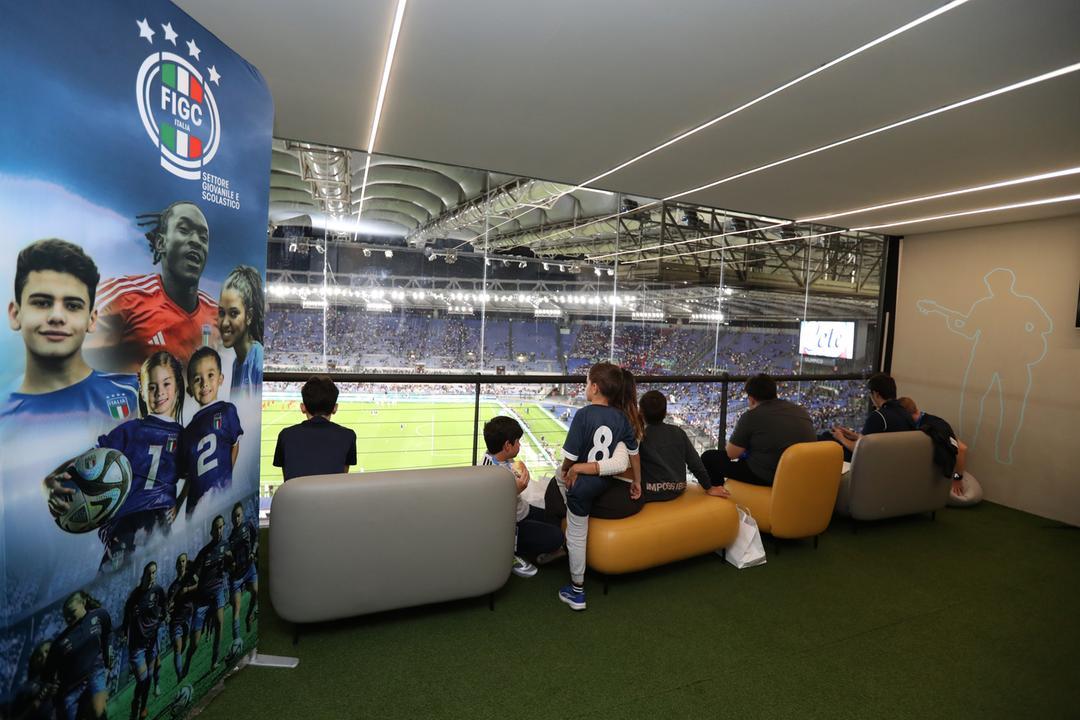
- Stadium initiatives (Matchday Format) - Quiet Rooms: During National Team matches in 2025, including Italy vs. Norway in Milan, safe and welcoming rooms were provided for fans with cognitive and sensory disabilities.
- Audio description: A service for blind and partially sighted fans, established as a standard feature at home matches involving the Azzurri.
- Environmental sustainability - Circular economy: Sustainable catering was introduced, and single-use plastic was eliminated from hospitality areas at Federation events.
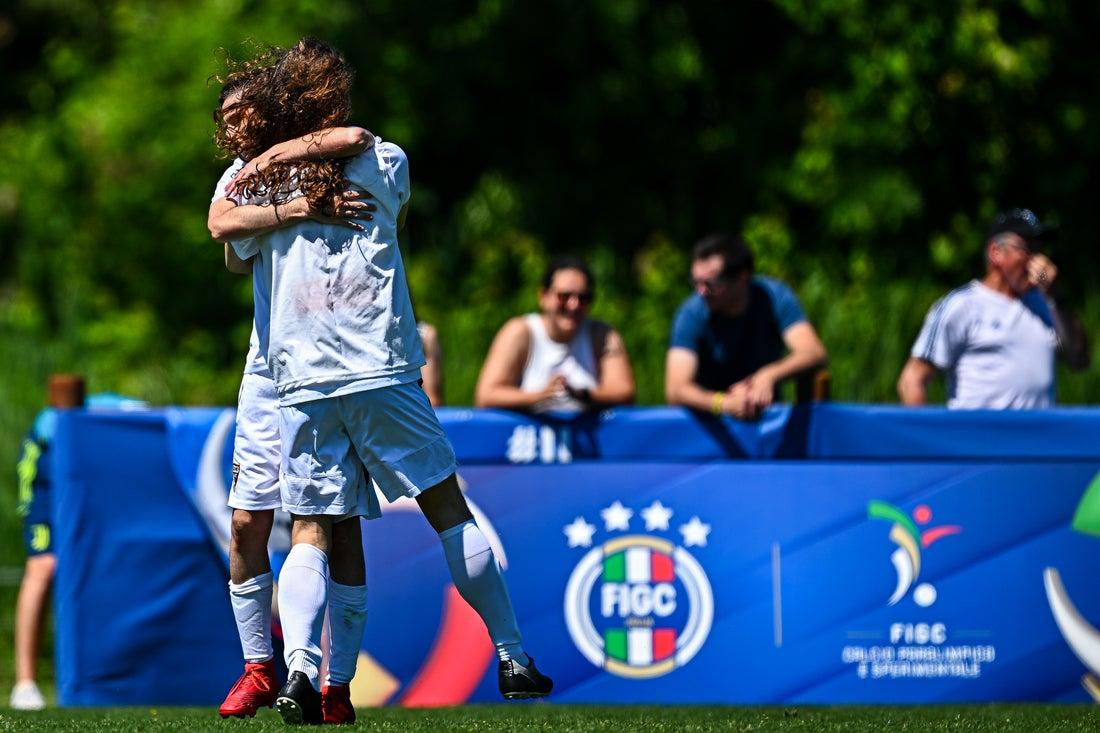
PARA FOOTBALL AND EXPERIMENTAL FOOTBALL. In 2025, activities continued under the DCPS (Divisione Calcio Paralimpico e Sperimentale), established by the FIGC in 2019 following the signing of a dedicated memorandum of understanding between the Italian Football Federation and the Italian Paralympic Committee (CIP). The FIGC was the first sports federation anywhere in the world to establish a dedicated internal division for para football and experimental football, setting in motion a process intended to drive significant cultural change. During the 2024-25 season, approximately 300 teams and 3,300 registered male and female players took part in the DCPS’s national competition, ‘Il Calcio è di Tutti’. The division’s national competitions were held across 17 regions and concluded with the National Finals in Tirrenia in May 2025. The division occupies a unique position within Italian football. Its projects are developed with support from key bodies across the Federation. All official division matches and certain tournaments held under its patronage are refereed by AIA match officials. The coaching course for players with disabilities was delivered in collaboration with the AIAC, while all professional leagues and the Lega Nazionale Dilettanti support the division in promotional and organisational matters, including through specific partnerships involving individual teams. Further evidence of the project’s significance came at the end of 2025, when the Italian Football Federation was recognised by the Italian Paralympic Committee as a National Paralympic Sports Federation. From 1 January 2026, the CIP delegated responsibility to the FIGC for the management (including technical, organisational, educational and financial aspects) of football activities for amputee athletes and athletes with brain injuries. Previously, these responsibilities had been held by the Italian Paralympic and Experimental Sports Federation (FISPES), at both national and international level.