

PHOTO
The day after Italy's failure to qualify for the 2026 World Cup, the VII Committee on Culture, Science and Education of the Chamber of Deputies requested — and promptly received — my availability for a hearing on the state of Italian football. The dialogue seemed to be welcomed and shared, if only for the few hours it remained on the agenda, by both the majority and opposition parliamentary groups. Because, regrettably, it was cancelled the following day, moments after I had tendered my resignation as President of the FIGC — as though the problems facing the game had consequently been resolved. For those who might argue that, having resigned, the undersigned is no longer in post, it should be made clear, to avoid any misunderstanding, that the Federal Statute provides for me to remain in prorogatio for ordinary administration until 22 June, the date on which the Extraordinary Elective Assembly has already been convened.
In any case, as I consider it right not to withdraw from the debate — and, in the same vein, from criticism also — I have decided to publish the report prepared for the hearing regardless, in the hope that it may serve as cause for reflection and for appropriate further consideration, including on the part of those who, in recent days, have wished to add their voice to the already crowded ranks of those who believe they have the 'solution in their pocket'.
The critical issues facing Italian football have been well known for years, referenced in numerous official documents that differ only in their statistical data — though all in constant decline — confirming that these are, for the most part, systemic deficiencies.
Why is nothing being done to reverse the negative trend?
In what follows, I will attempt to explain, drawing on the most recently available data, why — in the vast majority of cases — the impossibility of intervening effectively, due to factors both internal and external to the system, has thus far overtaken the inability to identify possible solutions.
If we have the best interests of Italian football at heart, as a sporting movement, it is necessary to clarify the actual competences of the Federation, the Leagues (and therefore the Clubs) and the institutions. Too many inaccuracies — if not outright falsehoods — fuel the relentless search for someone to blame, but above all the spread of mistaken assumptions. The latter penalises the genuine search for solutions to the problems of our game even more than the former.
In my view, it is no coincidence that in areas which fall directly and exclusively within the Federation's competence — social and environmental sustainability, youth and school projects, the development and training programme for the youth national teams, to cite but a few — considerable results have been achieved, in contrast to those areas in which the interests of the various governing bodies, as well as their respective autonomies, overlap to such a degree as to paralyse the system.
Gabriele Gravina
REPORT ON THE STATE OF ITALIAN FOOTBALL
1. The critical issues facing the Italian football system (which directly or indirectly affect the performance of the national team)
The low percentage of Italian players and young players playing regularly (which deprives the national team of an adequate pool from which to draw):
- Average age: Serie A continues to be one of the oldest leagues in Europe, with an average player age of 27 — the eighth oldest league on the continent, beating England, Germany, France, the Netherlands, Portugal, Norway, Belgium and others. (Source: CIES Football Observatory, Annex 1)
- Percentage of foreign players on the pitch: In the current Serie A season, players ineligible for the Italian national team have played 67.9% of total minutes. This is the sixth worst figure in Europe: in Spain, foreign players account for 39.6% of minutes played; in France, 48.3%. (Source: CIES Football Observatory, Annex 2)
- Number of players eligible for the national team: At Matchday 31 of the current Serie A season, of the 284 players who have averaged at least 30 minutes per match, only 89 — including 10 goalkeepers — are Italian. (Source: www.fotmob.com, Annex 3)
- Investment in youth development at national level: Italy ranks last — behind France, Spain, Portugal, the Netherlands, England and Germany, in that order — in total revenue generated over the past decade from international transfers of domestically trained players. (Source: CIES Football Observatory, Annex 4)
- Investment in youth development at club level: Among the top 50 youth academies in the world by ten-year revenue from the sale of home-grown players, only two are Italian (Atalanta and Juventus), while Inter rank 53rd. It is perhaps no coincidence that these are also three of the four Italian clubs with reserve teams — the introduction of which has long been resisted within our system. (Source: CIES Football Observatory, Annex 5)
- A summary figure that leaves no room for interpretation: Serie A ranks 49th out of 50 monitored leagues worldwide for the percentage of minutes played by U21 players eligible for the national team — a figure of just 1.9%. (Source: CIES Football Observatory, Annex 6)
The progressive decline in technical quality and the dispersal of young talent within Italian football (which is also reflected in the national team's competitiveness):
- Serie A does not feature among the top ten European leagues for metres covered in sprints;
- In Serie A, the average ball speed in matches is significantly lower (7.6 m/s) than the UEFA Champions League average (10.4 m/s) and that of the other leading European leagues (9.2 m/s);
- Serie A ranks last among the top five European leagues for dribbles per match (26.69 compared to 29.97);
- Since 2019/20, the number of successful dribbles in Serie A has been in decline, falling from an average of 19.02 per match to 12.36;
- Serie A ranks last among the top five European leagues for aggression during pressing phases, conceding a greater number of passes to the opposition when in possession.
- Furthermore, notwithstanding the fact that the Italian youth national teams (up to U20 level) have achieved the best results in their history under the current federal governance — as evidenced by the first-ever winning of UEFA's prestigious Burlaz Trophy and a notable improvement in the UEFA youth rankings — the comparison between the playing time afforded in senior club football, in Italy and across the rest of Europe, to players who win youth trophies is stark. The Spanish players who competed in the 2023 U19 European Championship (won by Italy) are no longer playing in youth football and have accumulated almost double the minutes in their top-flight leagues and almost six times more in European competition than their Italian counterparts. The Italian players who finished runners-up at the 2023 U20 World Cup were still largely playing youth football, while their French and English peers were not. (Source: FIGC Club Italia Football Analysis Area studies, Annexes 7, 8 and 9)
An economically unsustainable system, in which revenues generated are insufficient to cover costs (with the consequence that clubs prefer to sign players from abroad, who are often less expensive and subject to fewer regulatory constraints with regard to registration — for example, the different guarantee systems required, or the progressive relaxation of registration requirements for non-EU players, both of which fall within the newly recognised autonomy of Lega Calcio Serie A):
- Between 1986/87 and 2024/25, 194 clubs were denied admission to the professional leagues for financial non-compliance (in only two cases subsequently reinstated by the Administrative Court or the Council of State), while in the last 13 years alone, 519 points deductions have been imposed, instead. (Source: FIGC Report on Football 2025, Annex 10)
- Despite revenue growth slightly outpacing cost growth over the past five years, Italian professional football continues to lose in excess of €730 million per year. Across the three seasons affected by Covid, Italian professional clubs recorded combined losses of €3.6 billion. Notwithstanding this, labour costs have increased across all categories over the same five-year period. Whilst in Serie A revenues have grown at a faster rate — reducing the incidence of labour costs to production value from 55% to 52% — in Serie B that ratio has risen from 55% to 82% over the same period, and in Serie C from 88% to 89%. The incidence of debt to total assets, despite efforts in recent years, remains slightly above pre-Covid levels (80.6%, with total indebtedness of €5.5 billion). In 2007/08, aggregate revenues were sufficient to cover 97% of total indebtedness; by 2023/24, that figure had fallen to 83%. (Source: FIGC Report on Football 2025, Annex 11)
- Agent fees paid by clubs reached their highest ever level in 2025 (over €300 million in total), with particularly significant increases in Serie B, Serie C and the Women's Serie A Division as well. This is another area in which the footballing world cannot legislate autonomously, as it is subject to legislative provisions and competition law. (Source: figc.it, transparency section, sports agents data, Annex 12)
- The professional sector is bloated — 97 professional clubs is a figure matched by very few countries in the world: Mexico, Turkey, Argentina, Thailand and Saudi Arabia are the only nations with more professional clubs than Italy. (Source: FIFA Professional Football Report 2023, Annex 13)
A growing infrastructure gap, including relative to countries of lower sporting ranking (a further indicator of the system's competitive decline, which is also reflected in sporting results):
- Italy does not feature among the top ten European nations for the number of stadiums built or modernised between 2007 and 2024. (Source: FIGC Report on Football 2025, Annex 14)
A chronic inability to function as a coherent system:
- The number of stakeholders with divergent interests sitting on the Federal Council exceeds that found in comparable countries. (Source: Governance Structures of Football National Associations, CIES 2022, Annex 15)
2. What constraints — both endogenous and exogenous — and what responsibilities are hindering the development of the system?
The list has to begin with Legislative Decree 36/2021, given the devastating effects it has had on the foundations of Italian football. Among other things, this decree abolished the so-called "vincolo sportivo" (the registration bond), causing damage that is likely irreversible to the development of youth academies and, by extension, to the production of players potentially available to the national team:
- It is a national law, not a federal regulation, and has survived three different Governments (Ministers Spadafora — Conte II Government / Vezzali — Draghi Government / Abodi — Meloni Government);
- The Federation has consistently challenged it in multiple exchanges with Ministers and the relevant parliamentary committees, achieving only an extension of the residual registration bond from one year to two, and has sought to mitigate its effects through numerous amendments to federal regulations — the most recent approved just days ago — but the damage caused by Decree 36/2021 remains in its entirety. (Source: FIGC document of 15 February 2024 on the effects of the sports labour reform and amendments to technical training bonuses, Annex 16)
Mention must also be made of the fact that, for some years now — and in particular since the approval of the statutory amendments introduced in November 2024 following the so-called "Mulè amendment" — the professional leagues have enjoyed substantial autonomy in the organisation of their activities and a form of "right of agreement" on fundamental matters such as, for example, the definition of the National Licence system for admission to the leagues. This has (thus far) made it impossible to address certain fundamental reforms aimed at correcting the critical issues identified above, including:
- Reform of the league structure (Serie A and Serie B reduced to 18 clubs, with a reduction of the professional area of Lega Pro):
- The matter was first brought to the attention of the relevant components in dedicated technical working groups in February 2020;
- The strategic plan approved by the Federal Council in March 2024 expressly identified the following objectives: i) reducing the number of clubs across the professional area and Serie D; ii) revising the promotion/relegation model and the reinstatement/repechage model; iii) reducing the number of professional Leagues. (Source: FIGC Strategic Plan March 2024, Annex 17)
- In opposition to this proposal, and to any attempt at reform based on the removal — even for a limited period — of the leagues' so-called "right of agreement", threats of legal proceedings before both sporting and state judicial bodies were made;
- In February 2026, the seventeenth working draft was submitted to the federation's components;
- The existing statutory constraints — which require the consent of the leagues concerned and a qualified majority of three-quarters of votes (also in compliance with the aforementioned "Mulè reform") — have consistently prevented the adoption of any reform taking the above into account.
- Strengthening of admission criteria (e.g. financial and patrimonial indicators), which was, moreover, one of the founding points of the 2017 electoral programme of the then President of Serie B, who stood as a candidate for the federal Presidency and is now Minister for Sport, Andrea Abodi.
- The introduction of a minimum quota of Italian players required to be fielded, which is in any case impossible to implement as it runs contrary to the principle of the free movement of workers, which applies to football as a professional sport:
- Established EU case law (see, for example, the FIFA "6+5 rule" under Blatter) has confirmed the illegality of any rule that discriminates against the use of players on the basis of nationality. (Source: Statement of Commissioner Vladimir Spidla, The Commission shows a red card to the 6+5 rule proposed by FIFA, 28 May 2008, Annex 18)
- More recently, the European Court of Justice has also expressed reservations regarding UEFA's minimum quota rule for "home-grown" players. (Source: Judgment of the Court of Justice of the European Union (CJEU) of 21 December 2023 in the "Antwerp case", Case C-680/21, UL and SA Royal Antwerp Football Club v Union Royale Belge des Sociétés de Football Association ASBL, Annex 19)
- The rules governing the possible use in the national team of "naturalised" players are also more restrictive than those of many other countries or international sports federations;
- Consequently, the decision whether or not to field young Italian players in the first team is left entirely to the discretion of clubs and their coaches, with no power of intervention on the part of the Federation;
- No systemic collaboration on the congested fixture calendar, taking into account the needs of the national team, given that the management of the league calendar is the exclusive prerogative of the relevant league (by virtue of the aforementioned autonomy), with the Federation having no power of intervention whatsoever.
Finally, other necessary interventions aimed at improving and/or securing the system have been hampered by constraints and difficulties of various kinds.
- Renewal of base infrastructure:
- Investment in new facilities — whether already completed, under way, or planned — falls entirely on clubs and their owners, with no institutional support whatsoever:
- Beyond certain legislative measures that have streamlined administrative procedures, no financial allocations have been made, not even in anticipation of Euro 2032. By contrast, events with lower socio-economic impact and media visibility — such as the Milan-Cortina Olympics, the America's Cup in Naples, or the Mediterranean Games in Taranto — have received funding running into the billions;
- The organisational support measures for Italy's candidacy to co-host Euro 2032 with Turkey — repeatedly announced by the Executive (a dedicated inter-ministerial committee; an extraordinary commissioner) — have thus far got off the ground with culpable delay or excessive slowness.
- Investment in new facilities — whether already completed, under way, or planned — falls entirely on clubs and their owners, with no institutional support whatsoever:
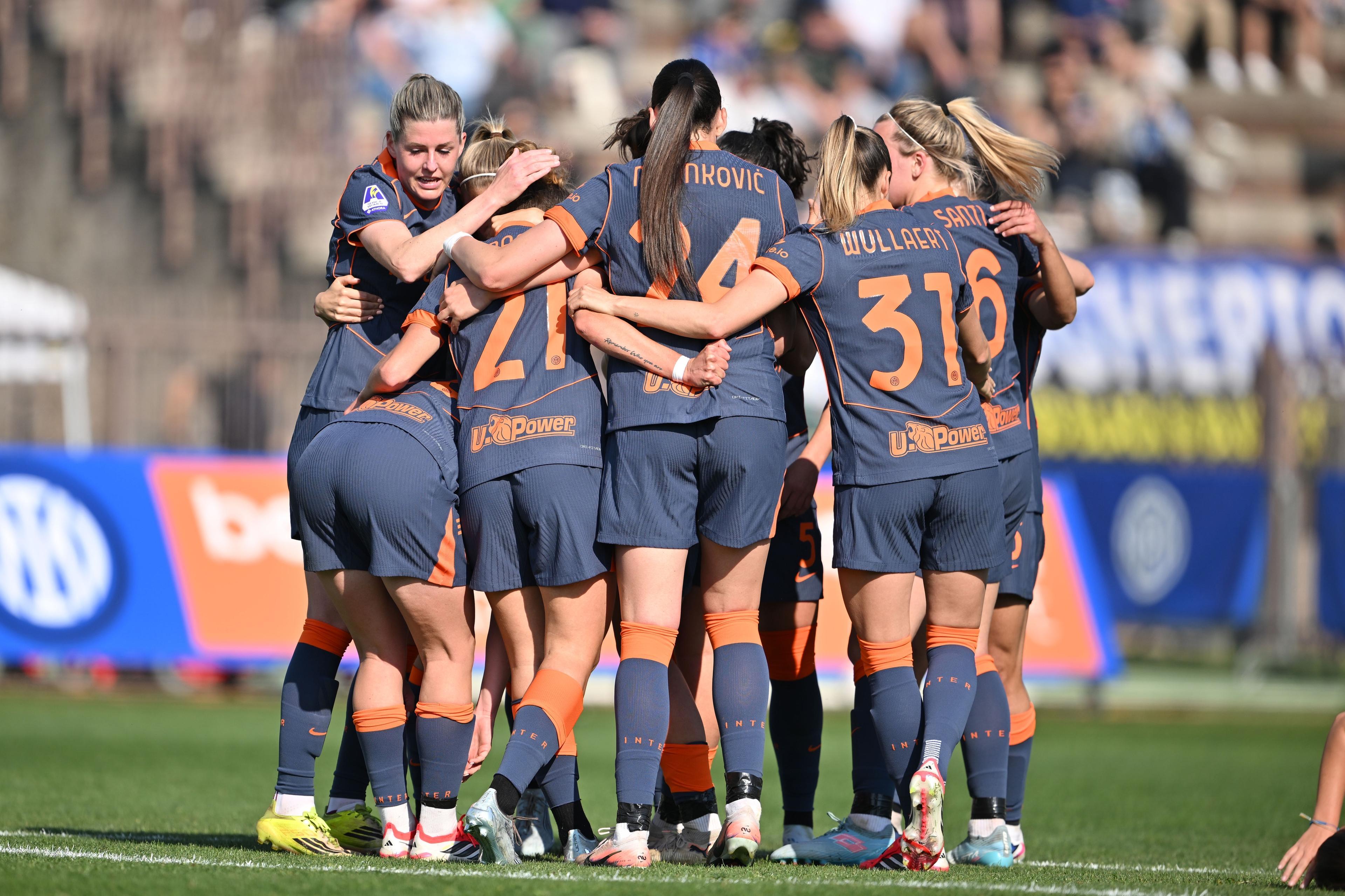
- Development of women's football:
- Although the recognition of professional status for women's football — the FIGC being the only sports federation to have done so — was universally hailed as a 'civilisational achievement', beyond the one-off contribution secured for a three-year period (subsequently extended by a further year) in the 2020 Budget Law (the so-called "Nannicini Law"), the costs of the transition to professionalism in women's football are borne entirely by clubs and the Federation;
- By contrast, in Spain, public funding for the transition of women's football to professional status was almost double (€20 million over the three-year period, against 10.7 million);
- On average, a Women's Serie A club today spends €4.4 million — more than the "Nannicini contribution" provided for the entire sector — against revenues only slightly above €1 million;
- The transition to professionalism has driven a cost increase of approximately 40%, due predominantly to higher tax burdens. In total, labour costs in 2023/24 approached €30 million, more than a third of which represents tax obligations;
- In this area too, the detailed proposals for public support measures put forward by the Federation and the Women's Serie A Division have fallen on deaf ears.
- Reform of the refereeing system:
- Another area in which the current Federal Statute — in keeping with demands made by political bodies as well (see, most recently, the Resolution of the VII Standing Committee of the Senate on Culture, Cultural Heritage, Public Education, Scientific Research, Entertainment and Sport of 5 March 2025, hereinafter the "Marcheschi Committee Resolution") — grants the AIA substantial and reinforced autonomy, which has thus far made the reform process far from straightforward. (Source: Marcheschi Committee Resolution, Annex 20)
3. How to respond? The proposals on the table
The right to a levy on gambling (a percentage of turnover or winnings from football betting to be reinvested in the game itself, for the benefit of youth development and infrastructure):
- This requires only the transposition into Italian law — as has already occurred in many European countries — of a principle enshrined in a specific European directive and, more recently, reiterated in the Marcheschi Committee Resolution as a precise commitment to which the Government should adhere;
- The contribution would be subject to specific 'virtuous' ring-fencing: investment in infrastructure; development of youth sectors; combating problem gambling;
- The proposal is contained in several official FIGC documents submitted to the Government in recent years (e.g. Strategic Plan 2024; request for urgent post-Covid measures addressed to the Draghi Government, December 2021);
- A similar measure was in fact introduced by Ministers Spadafora and Gualtieri and has never been renewed;(Source: Creutzmann Report on online gambling in the internal market, 15 November 2011 (2011/2084(INI)), Annex 21. FIGC Strategic Plan, 28 March 2024, Annex 22)
A tax credit (modelled on the system applied, for example, to the film industry) to fund investment in young male and female players (U23) eligible for the national teams and in infrastructure — also included among the Government's commitments in the Marcheschi Committee Resolution. (Source: FIGC Strategic Plan March 2024, Annex 23)
The restoration (with possible reformulation) of the favourable tax regime for professional players and coaches arriving from abroad, abolished at the end of 2023 under the "Decreto Crescita", with a view to restoring the competitiveness of the Italian football industry — particularly given that the aforementioned abolition has not produced the anticipated results.
The abolition of the ban on advertising and sponsorship by betting operators, introduced by the "Decreto Dignità" of 12 July 2018 and equally included among the Government's commitments in the Marcheschi Committee Resolution — not least given that the measure has proven largely ineffective. Indeed, it was the final report of the Parliamentary Commission of Inquiry into illegal gambling (2022) that highlighted how, notwithstanding the legislation in question, gambling has actually increased even among minors, as has illegal gambling; the measure has therefore proven entirely ineffective in curbing problem gambling, while at the same time reducing revenues for sports clubs and placing Italian football at a competitive disadvantage relative to its European counterparts — as UEFA itself has noted in a recent report highlighting the widespread prevalence of betting and gambling as the main shirt sponsor of European clubs. (Source: The European Club Finance and Investment Landscape, UEFA, 2026, Annex 24)
The adoption of support measures for the construction of new stadiums and/or the modernisation of existing ones, both with a view to Euro 2032 and the broader development of the Italian football system. The introduction of measures aimed at "encouraging public investment and attracting private capital for the modernisation of obsolete sporting facilities and the construction of new ones, including through regulatory simplification" features as the very first recommendation to the Government in the repeatedly cited Marcheschi Committee Resolution, and was also included among the 'engagement and collaboration with institutions' initiatives in the FIGC Strategic Plan of March 2024. (Source: FIGC Strategic Plan March 2024, Annex 25)
The recognition of Sports Federations as "social enterprises", or, at the very least, the reintroduction of the provision that enabled them, from 2022 to 2024, to reinvest the tax relief on commercial profits in socially relevant activities (e.g. school and grassroots football, Paralympic football).
Renewed funding for the contribution to professional women's football.
A technical revitalisation project for Italian youth football (entrusted to Maurizio Viscidi), centred on restoring the primacy of technical skill over tactical considerations, strengthening the training of youth sector coaches, a renewed focus on non-competitive grassroots activity, and the reform of youth competitions — a project on which Simone Perrotta and Gianluca Zambrotta have also worked. (Source: extract from the Progetto Radici Azzurre — L'officina FIGC del talento italiano — Dal Betting al Talento, Annex 26) Since October 2024, a project for the reorganisation and coordination of the activities of the Youth and School Sector, the Technical Sector and Club Italia — covering technical training, recruitment, grassroots activity and talent development — has also been made available to relevant parties.
A reform project for the Serie A, B, C and D league structure, currently unachievable due to the absence of agreement among all the components concerned.
A refereeing sector reform project (available in two versions: a more radical option involving the establishment of a dedicated company for the management of top-level professional refereeing; and one fully achievable within the current institutional perimeter of the AIA, which nonetheless provides for the introduction of professional status at the top level of refereeing, a revision of the internal electoral mechanisms, a rethinking of the governance model, and a clear separation between the political-associative management and the technical direction of the AIA).
As demonstrated above, it is entirely evident that, for the good of Italian football, the only way to intervene is to do so radically, through a unified approach that transcends the boundaries of what is merely convenient or expedient. A step forward from all federal components would be decisive, with the fundamental support of the Government and Parliament. Because without this resolute and unanimous wish to place the common good above the defence of individual positions — with politics required to create the conditions and provide the appropriate instruments for action — no single individual can bring about the true and complete revitalisation of Italian football.