

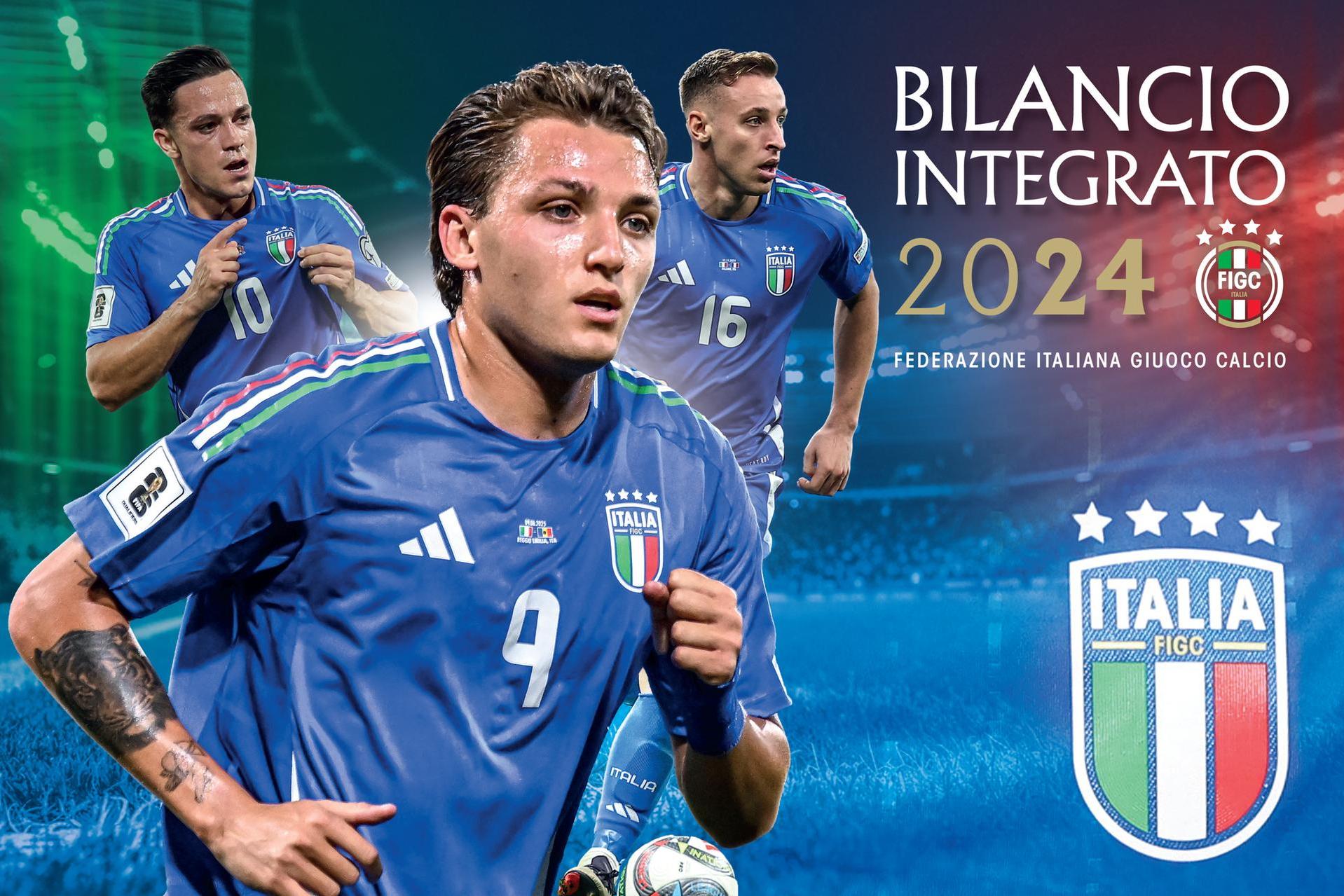
PHOTO
Initiatives that are increasingly aligned with the vision of a genuine “social enterprise”, as well as a key presence across the country, and a strategic tool to support and enhance the well-being of the national community. The Integrated Report of the Italian Football Federation, now in its tenth edition, allows us to analyse the evolution of the Federation’s management model over time. With 1.5 million registered members, the organisation, considering professional football alone, generates a return for the national system in tax and social security revenues of €20.5 for every euro invested, highlighting its incredible socio-economic impact. Beyond representing a major industrial sector, with almost €7 billion in direct revenue and a €12.4 billion contribution to Italy’s GDP, the football ecosystem continues to strengthen its commitment to human rights and environmental protection. Nearly one million students have taken part in the “Valori in Rete” project promoted by the FIGC Youth and School Sector together with the Ministry of Education and Merit, while the Federation has delivered more than 50,000 training and educational courses focused on safeguarding.
Gabriele Gravina, President of the Italian Football Federation, commented, “Through its ability to unite people, communities, and generations, football bears a responsibility that goes beyond competition and performance. Therefore, the FIGC has chosen to pursue a clear and structured commitment to social and environmental sustainability. We want football to become a genuine tool for change, capable of creating lasting impact for the community. This report highlights the results achieved over a year of remarkable progress, during which we embraced challenges that once seemed distant from our world but ultimately delivered a highly positive impact. Inclusion, youth development, education, and the protection of health and the environment are just some of the areas that today make football an incredible social platform, one that deserves even greater recognition for its commitment and its contribution to society."
The main strategic programmes carried out by the FIGC
The Azzurri are at the centre of the Federation’s programmes. In 2023–2024, the 20 national teams played 226 matches, with 707 players called up across men’s and women’s squads.
The men’s senior national team qualified for the second stage of the Nations League for the third consecutive season and reached the round of 16 at UEFA EURO 2024. The women’s national team finished second in their group in the Women’s Nations League. In 2025, for the first time, Italy qualified for three European tournaments in the same year across different age categories, reaching the semi-finals in all three competitions. Thanks to these results, the U19 and U17 teams qualified for their respective World Cups. In the Women’s EURO 2025, the Azzurre narrowly missed out on the final, losing to England only in extra time in the semi-final. The match saw almost 4.1 million TV viewers tuning in from Italy, the second-highest audience figure in the history of Italian women’s football.
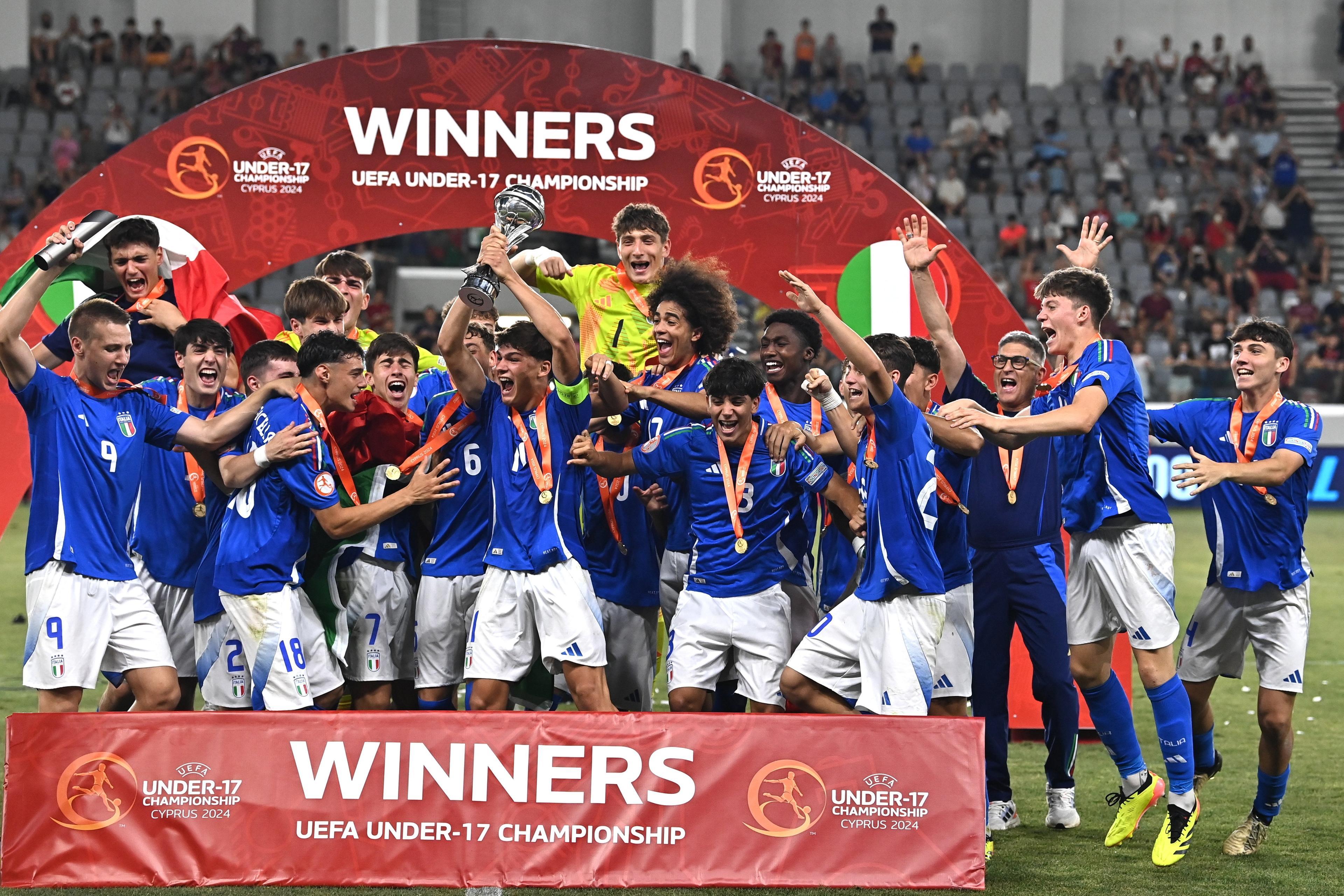
The growth of the men’s youth national teams continued, highlighted by the Under-17 European Championship title in 2024, recording the first in the history of Italian football, following the earlier successes of the Under-19 European title and the runner-up finish at the 2023 Under-20 World Cup. In 2025, the Under-18 team won Italy’s first bronze medal at a World Cup in that category. The performance of the Beach Soccer national team has also been outstanding: the Azzurri finished second in both the World and European Championships in 2024 (after winning the continental title the previous year), before reclaiming the European title in 2025.

Beyond the development of the national teams, in 2024 the Federation also advanced all its other key strategic programmes, starting with the enhancement of youth football from a sporting, educational, and social perspective. In particular, it is worth highlighting the framework agreement between the Italian Football Federation and the Ministry of Education and Merit, aimed at promoting sport and encouraging young people to embrace respect, fair support, and inclusion. Nearly one million students were involved between 2016 and 2024 in the wider educational, physical, and socio-educational initiative “Valori in Rete”.
In line with the trends of leading sports organisations, sustainability has become a central pillar of the Federation’s initiatives. The Italian Football Federation is the first sports federation in Italy to have presented its own sustainability strategy, inspired by the UN 2030 Agenda and the UEFA Sustainability Strategy. The plan identifies more than 60 KPIs and 70 measurable strategic objectives, which Italian football, considered as its own branch, aims to achieve by 2030 across 11 policy areas, covering human rights and environmental protection.
-
Anti-Racism: In 2024, the Federation continued the campaign “#UnitiDagliStessiColori” for the third consecutive year, promoting diversity through the use of primary colours.
-
Child Protection & Safeguarding: The FIGC was the first sports federation to introduce a structured Safeguarding system, alongside a dedicated portal (figc-tutelaminori.it), through which more than 50,000 training courses have been delivered.
-
Equality & Inclusion: The Federation continued to develop initiatives supporting vulnerable groups, including “Zona Luce” (in juvenile detention facilities), and socio-educational projects in disadvantaged areas such as Caivano, Corviale, and Tamburi, as well as campaigns addressing gender-based violence.
-
Football for All Abilities: The FIGC is the first sports federation in the world to establish a dedicated Paralympic and Experimental Activity Division. In the 2024/25 season, more than 4,000 registered participants were involved, including individuals with cognitive disabilities and psychiatric conditions.
-
Health & Wellbeing: Since 1995, the FIGC has partnered with Fondazione AIRC through the project “Un Gol per la Ricerca”, generating over €550,000 in donations in the past decade.
-
Support for Refugees: The flagship programme “RETE! Refugee Teams” has involved more than 10,000 unaccompanied foreign minors and asylum seekers in sporting and socio-educational activities over the past ten years.
-
Emergencies & Rights: Greater attention is being paid to humanitarian emergencies, particularly to Ukraine, following the 2024 framework agreement between the FIGC and the Ukrainian Football Federation. Two meetings were organised at Coverciano between Ukrainian youth and the senior national teams.
-
Circular Economy: Actions implemented in hospitality areas include the elimination of plastic, low-impact inclusive menus, sustainable waste management, and the redistribution of surplus food to people in vulnerable situations.
-
Climate Emergency: The project “SeminiAMO il futuro” led to 260 trees being planted at Masseria Antonio Esposito Ferraioli, the largest asset confiscated from organised crime, contributing to an estimated absorption of 28 tonnes of CO₂.
-
Event Sustainability: Audio-description services were introduced for blind supporters at national team matches, alongside “Quiet Rooms” for young people with autism or disabilities. A new sustainability-focused procedure has also been adopted for organising national team events.
-
Infrastructure Sustainability: The flagship project “Coverciano 3.0” will see the installation of photovoltaic panels covering approximately 4,000 m² at the Technical Centre, to reduce primary energy demand by 32.5% by 2030
-
Sustainability: “Sostenabilia” Platform As part of its ongoing commitment to sustainability, in 2024, the Italian Football Federation launched “Sostenabilia”, a multimedia platform designed to showcase and centralise all initiatives developed under the Federation’s Social and Environmental Sustainability Strategy.
This innovative project quickly moved beyond the digital space to become a true brand identity, bringing together and formally recognising the wide range of sustainability activities promoted by the Federation.
Sustainable Development, Investment, and Growth
Considering the future of the sport, the modernisation of sports infrastructure remains one of the main priorities, directly linked to hosting major international football events.
Italy’s excellence and the national football system in organising such competitions have been demonstrated on multiple occasions, within a medium- to long-term strategic framework aimed at enhancing the positive legacy of major events.
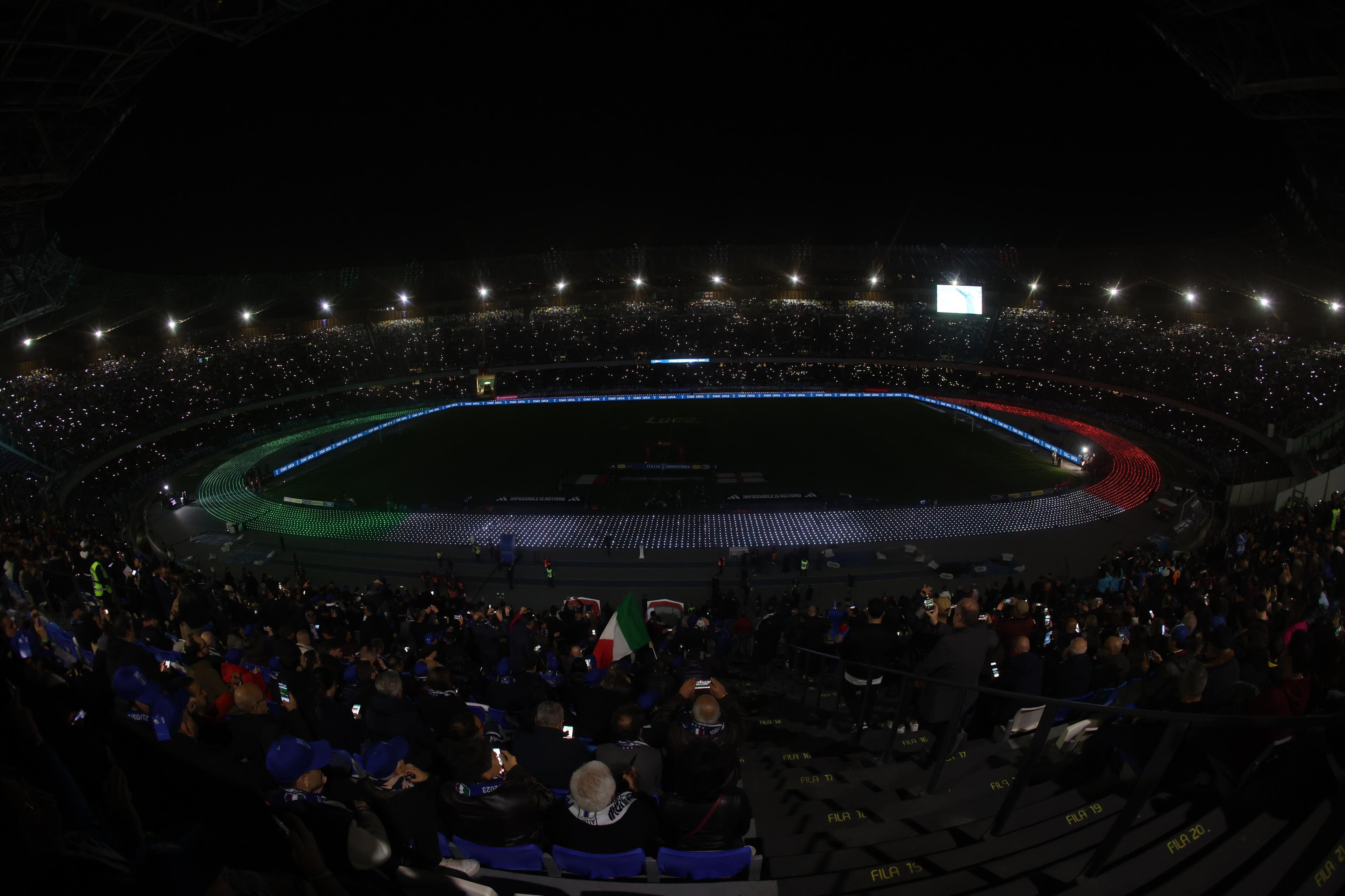
Since 2009, Italy have hosted nine major tournaments: two men’s UEFA Champions League finals, two UEFA Women’s Champions League finals, one UEFA Europa League final, the UEFA Under-21 European Championship (2019), four matches of UEFA EURO 2020, the 2021 UEFA Nations League Finals, and most recently the 2025 UEFA Super Cup, hosted in August 2025 in Udine for the first time in Italy. The event once again reinforced the quality and efficiency of the successful “Italian model.” Looking ahead, recent awards include the 2026 UEFA Futsal Champions League Final Four (Pesaro) and the 2029 UEFA Women’s Under-19 European Championship (Abruzzo and Marche), alongside the awarding of UEFA EURO 2032 to Italy and Turkey, a major milestone in the long-term development strategy of Italian football. The European Championship is the third-largest sporting event in the world in terms of audience (over 5 billion viewers) and economic impact (for example, €7.4 billion generated by UEFA EURO 2024 in Germany). The tournament will serve as a decisive force in planning a new generation of football infrastructure in Italy, and a vital opportunity to bring in tourism, investment, and visibility, and to foster moments of collective participation and pride. It will generate exceptional added value, directly and positively contributing to improving the quality of life in local communities.
More than ever, on occasions like these, football is a source of joy and development.