

PHOTO
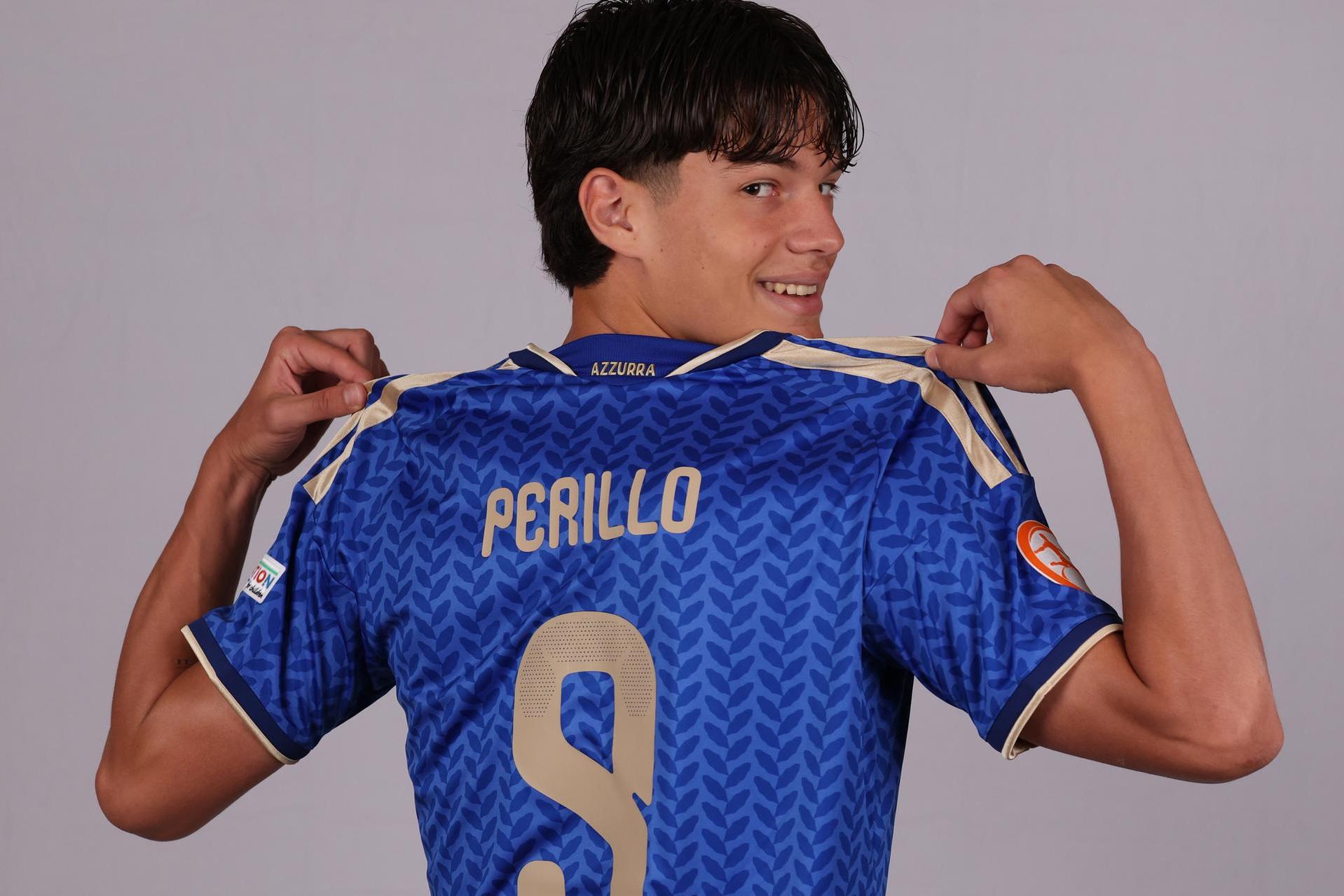
Some fairy tales begin on a grand stage; others are born in a car park behind home, or in an ordinary park, with a mother waiting for it to get dark before calling you back inside. The story of Diego Perillo, Empoli’s 2009-born striker, belongs to the second category. And perhaps that is exactly why it feels so authentically football.
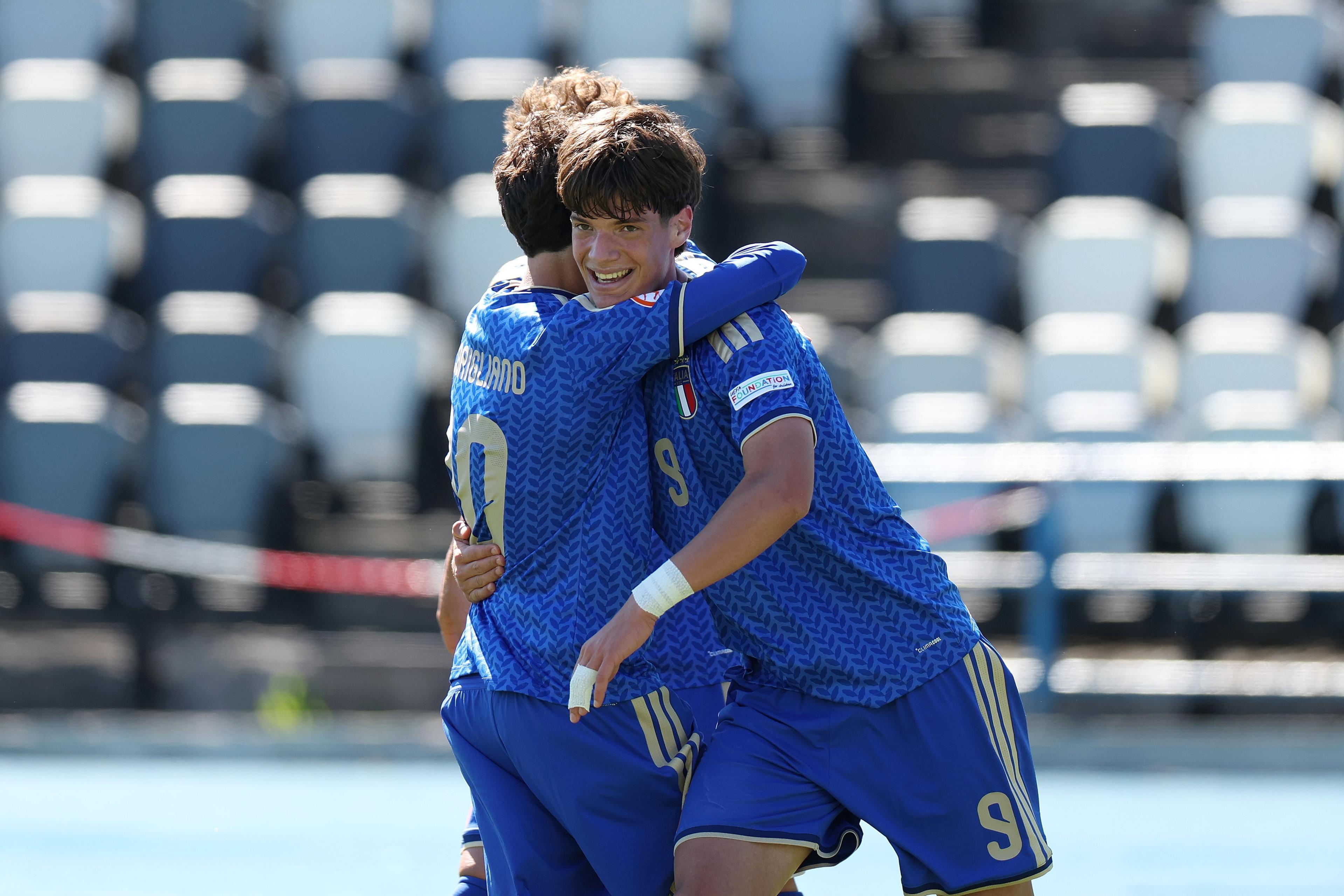
Yesterday afternoon, at the Kalevi Central Stadium in Tallinn, when the ball crossed the line (aided by an error from Monaco goalkeeper Axel Decrenisse) allowing Italy Under-17s, coached by Daniele Franceschini, to secure a 1-0 win over France, Perillo did not celebrate like many players his age would. There was no swagger, no vanity, but simply amazement – the same amazement children feel when a dream suddenly becomes reality. Though it was his 36th goal of the season and his 13th in an Italy shirt, it his first at the Euros, currently taking place in Estonia until 7 June.
“I’m pleased with the goal,” Diego admitted, “because it helped the team win and earn all three points.”
That sentence already says a lot about the player. The group comes first, before everything else. The team before the individual. Even if, for a striker, scoring always remains a personal source of pride.
“The match was very balanced,” he said, “with chances for both sides, but we knew how to endure and managed to secure a hugely important win.”
A decisive goal, securing the Azzurrini victory in their Group B opener. But the best scripts always begin long before the spotlight.
Diego was born on 17 March 2009 in Prato, a hardworking, down-to-earth city where football is often a huge part of family life. For him, he was introduced to the beautiful game immediately. At five years old he joined Vaianese Impavida Vernio, before moving to Prato, then Maliseti Tobbianese, and finally Empoli, one of Italy’s most respected academies when it comes to developing young talent.
Yet there is one image that tells the story of young Diego better than any scout’s report: his mother Lucia taking him to the park to play football. “Always.” That is where a striker is truly born.
His story began there — with a worn football and someone believing in him before he was able to comprehend how important the game would become in his life, chasing a dream without noticing time passing by.
His idols say plenty about him too: “Stiven Shpendi and Francesco Pio Esposito.” Two different interpretations of the striker’s role – one at Empoli, one in the national team – but united by the same drive. Watching Diego play, you get the feeling goals are not a bonus, but a necessity.
“For me, scoring is still an incredible feeling,” he admitted. “Every single time.”
And he says it with disarming simplicity: “When I step onto the pitch, I think about two things — helping my teammates and scoring myself.”
In those words lies the whole psyche of the modern centre-forward. Today’s No.9 is asked to press forward, link play and feed others, but in the end he is still judged the same way as always: by goals.
And yesterday afternoon, Diego did exactly what strikers are meant to do. He made the difference in a balanced game. At 17, Italy vs France is never just another match. It is a gateway to professional football, a mirror reflecting what you might one day become.
That is why his goal matters. It matters because it came against the reigning runners-up. It matters because it came on his Euros debut. And it matters because it was the result of his entire family’s sacrifices.
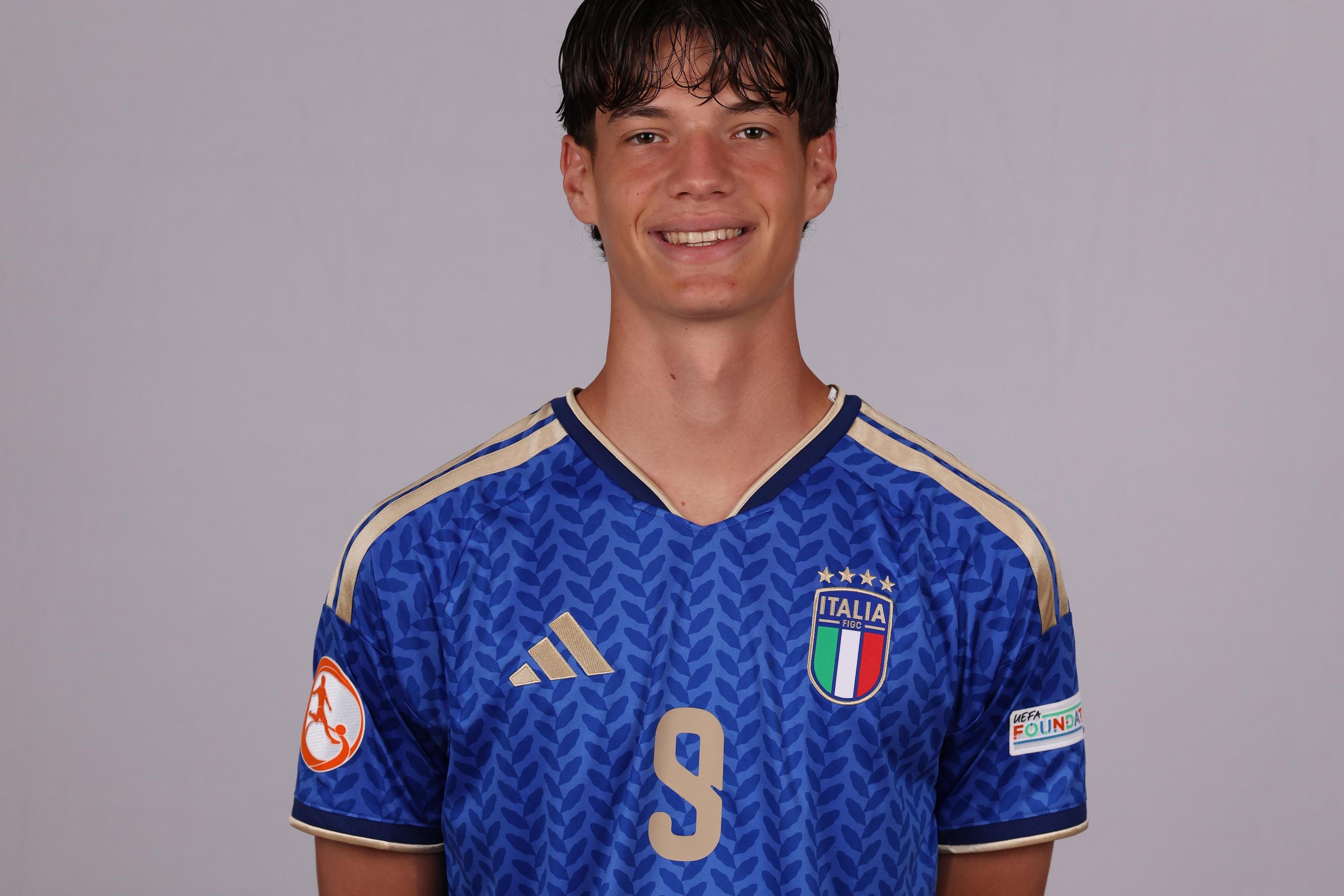
“Wearing the Italy shirt,” Diego added, “is a great honour and a huge responsibility.” He continued: “Playing at the Euros makes me happy and proud.”
Simple, sincere words, just like him. A teenager still able to speak without filters or performances.
“I want to make my family proud,” he said, his eyes shining. And in those words there is still the flavour of grassroots football — the kind that teaches you every match is an opportunity to thank those who drive you to training, who wait off the pitch, in sunshine and rain, sacrificing time and work so you can chase a dream.
And so, that goal at the Kalevi Central Stadium became something greater than a simple 1-0 victory. It became the exact moment a boy from Prato, raised on Tuscany’s local pitches, discovered that the dreams he carried as a child really can travel across Europe and come alive on an Estonian afternoon.
“Playing in the Euros,” he admitted, “is something I’ve dreamed about since I was a child.”
Because football, ultimately, is still just that: a child running after a ball, hoping that one day an entire stadium will call out his name.
Yesterday afternoon, in Tallinn, that child was called Diego Perillo.
The next challenge for Franceschini’s side will be on Friday 29 May at 13:30 CEST, once again at the Kalevi Central Stadium, where Italy will face Montenegro, who suffered a 2-1 defeat to Denmark in their opening match at the Kadriorg Stadium. Another game, another chapter waiting to be written.
BACKGROUND. Born on 17 March 2009 in Prato, Diego Perillo took his first steps in football at the age of five with Vaianese Impavida Vernio, an amateur club in Tuscany. The following year he joined Prato, before moving to Maliseti Tobbianese in the summer of 2016, where he was spotted by Empoli, who signed him the following season.
For Empoli this season, he has made 22 appearances (1,651 minutes played) and scored 23 goals for Lorenzo Tonelli’s Under-17 side, while also making his debut for Andrea Filippeschi’s Under-20 team in the Primavera 2 Championship (Empoli 1-1 Bari, 20 December 2025).
ITALY SQUAD LIST
Goalkeepers: 1. Emanuele Giaretta (Juventus), 12. Christian Lupo (Lecce)
Defenders: 2. Giampaolo Bonifazi (Roma), 3. Matteo Albini (Como), 4. Djibril Diallo (Parma), 5. Ludovico Varali (Parma), 6. Andrea Donato (Inter), 13. Lorenzo Dattilo (Roma), 14. Lorenzo Puricelli (Inter), 20. Edoardo Dario Rocca (Inter)
Midfielders: 8. Edoardo Biondini (Empoli), 15. Gianluca Tommaso Okon-Engstler (Club Brugge), 16. Francesco Ballarin (Venezia), 17. Francesco Gasparello (Atalanta)
Forwards: 7. Jacopo Landi (Empoli), 9. Diego Perillo (Empoli), 10. Thomas Corigliano (Juventus), 11. Marcello Fugazzola (Atalanta), 19. Tommaso Casagrande (Hellas Verona), 21. Federico Croci (Fiorentina)
STAFF – Head Coach: Daniele Franceschini; Head of Delegation: Filippo Corti; Deputy Youth National Teams Coordinator: Daniele Zoratto; Assistant Coach: Marco Scarpa; Goalkeeping Coach: Francesco Antonioli; Fitness Coach: Roberto Ghielmetti; Match Analyst: Francesco Donzella; Doctors: Francesco Cuccaro and Giorgio Liberati Petrucci; Physiotherapists: Aldo Abbadia and Saverio Didonato; Nutritionist: Claudio Pecorella; Academic Tutor: Fabrizio Scarpelli; Club Italia Scout: Claudio Gabetta; Administration, Finance and Control: Andrea Ottaviani; Press Officer: Alessandro Paoli; Secretary: Guglielmo Cammino
UEFA European Under-17 Championship Estonia 2026 | Schedule
Group Stage (25 May – 1 June)
Group A: Estonia, Belgium, Croatia, Spain
Group B: Montenegro, France, ITALY, Denmark
Matchday 1
Monday 25 May
Croatia 0-2 Belgium
Estonia 1-4 Spain
Tuesday 26 May
ITALY 1-0 France
Montenegro 1-2 Denmark
Group A standings: Spain 3 (+3), Belgium 3 (+2), Croatia 0 (-2), Estonia 0 (-3)
Group B standings: Denmark 3 (+1), ITALY 3 (+1), Montenegro 0 (-1), France 0 (-1)
Matchday 2
Thursday 28 May
13:30 CEST: Belgium vs Spain, Rakvere Linnastaadion, Rakvere
18:00 CEST: Estonia vs Croatia, Lilleküla Stadium, Tallinn
Friday 29 May
13:30 CEST: Montenegro vs ITALY, Kalevi Central Stadium, Tallinn
18:00 CEST: France vs Denmark, Kadriorg Stadium, Tallinn
Matchday 3
Sunday 31 May
13:30 CEST: Belgium vs Estonia, Lilleküla Stadium, Tallinn
13:30 CEST: Spain vs Croatia, Rakvere Linnastaadion, Rakvere
Monday 1 June
13:30 CEST: France vs Montenegro, Kadriorg Stadium, Tallinn
13:30 CEST: Denmark vs ITALY, Kalevi Central Stadium, Tallinn
Knockout Stage (4–7 June)
Semi-finals – Thursday 4 June
SF1 – 13:30 CEST: Group A winner vs Group B runner-up, Lilleküla Stadium, Tallinn
SF2 – 19:00 CEST: Group B winner vs Group A runner-up, Kadriorg Stadium, Tallinn
Final – Sunday 7 June
19:00 CEST: Winner SF1 vs Winner SF2, Lilleküla Stadium, Tallinn