

PHOTO
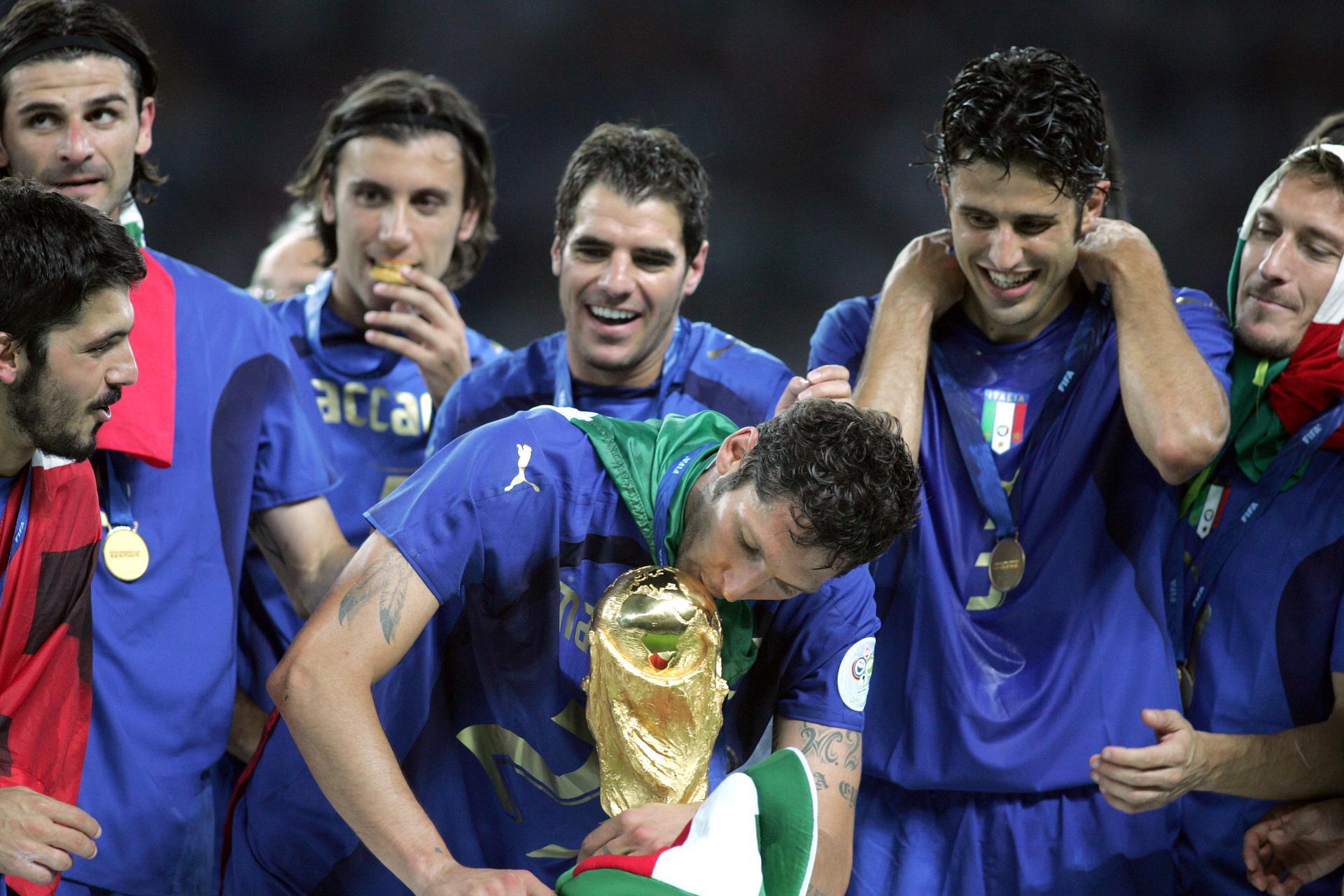
Marco ‘Matrix’ Materazzi chose the Azzurri pill. All it took was keeping his eyes open to realise that sometimes reality really is better than imagination. Try to picture winning the World Cup. Better yet, imagine lifting it into the sky after scoring in the final and converting one of the five penalties in one of the most iconic shootouts in football history. If you can’t even begin to imagine all that, take a few minutes to listen to someone who, twenty years ago, actually made that dream come true: “When we got to the penalties, there was someone like Rino (Gattuso, ed.) who had already taken off his boots,” Materazzi recounts in the interview with Donatella Scarnati, now available on Vivo Azzurro TV. “Iaquinta was keeping wide, Fabio (Cannavaro, ed.) had said he would take the sixth, but in my opinion, Buffon would have taken it before him. So there weren’t many of us left. I’ve always taken penalties, and I felt ready, even though I had this obsession that if you score during the game, you end up missing in the shootout. But when you get there, you can’t back down.” His father was a coach; he lost his mother aged 15, he has his wife Daniela, three children, a grandchild, and his brother Matteo, who in September 2024 was diagnosed with ALS (“a bolt from the blue”). Loved ones matter more than a World Cup, a Champions League, or five Scudetti: “I’m a person who came from nothing, who has a wonderful family. That’s the most important thing, beyond whatever I’ve won or lost.”
GOAL-SCORING DEFENDER.
In a time when full-backs weren’t yet expected to cover the entire flank and central defenders stayed firmly in their penalty area with no offensive ambitions, Marco Materazzi didn’t just defend the fortress. A naturally left-footed player and penalty specialist, he hit double figures in terms of goals scored twice in Serie A. In the 2000/2001 season with Perugia, he scored 12 goals, still a record for a defender in the Italian league. But Materazzi, like Nesta, Cannavaro, and Maldini, was first and foremost a defender: “In terms of clean play and tactical intelligence, Nesta was the strongest, alongside Maldini. Playing next to them, I felt a bit in awe. I can’t say the same about Cannavaro because I felt closer to him; we seemed like two kids playing in the park. Defenders today have changed, but football has changed too. In our time, the main priority was marking and not conceding goals. Everyone had their own jobs. Today, a defender almost has to know how to ‘handle’ the ball with their feet first, and not that I couldn’t do it, before worrying about marking and not losing their man. I still believe that a defender should defend, a midfielder should play midfield, and a forward should attack.”
THE SHIRTS CLOSEST TO HIS HEART. From Marsala to Trapani, from Carpi to his English stint with Everton, Materazzi wore many shirts throughout his career. But he only kissed the badge of three: “These are the ones I feel most connected to. The Azzurri shirt, my Perugia one, as it was also the one that gave me the chance to make it to the National Team, and the Inter shirt. I won the Treble with some of the teammates, Toldo, Córdoba, and Zanetti, who had shared the heartbreak of 5 May, 2002. It goes to show that if you keep working at what you haven’t achieved yet, you’ll get there in the end.” On his back, the number 23, a tribute to Michael Jordan: “My father used to say I should have played basketball. Thankfully, I didn’t listen to him.”
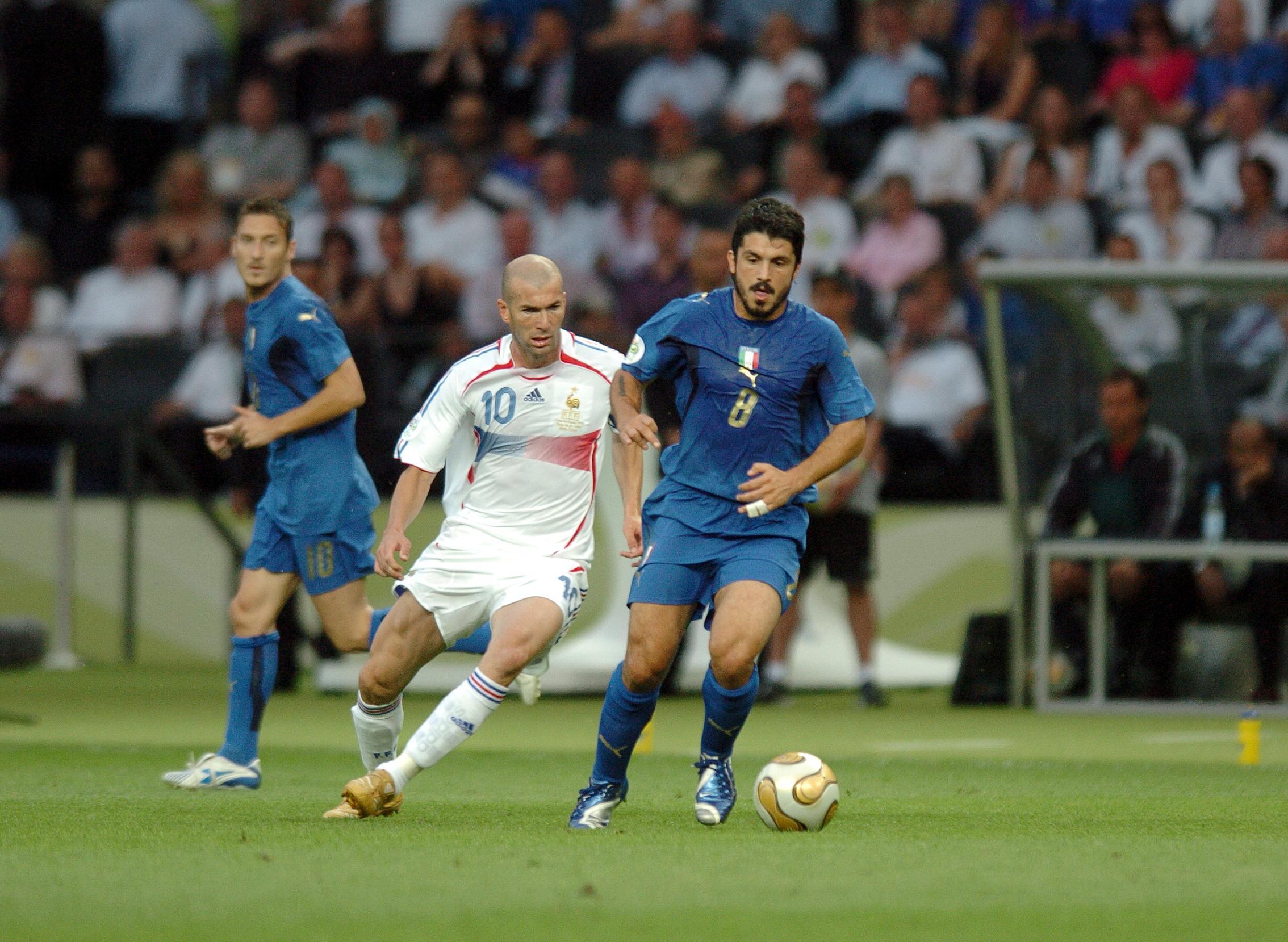
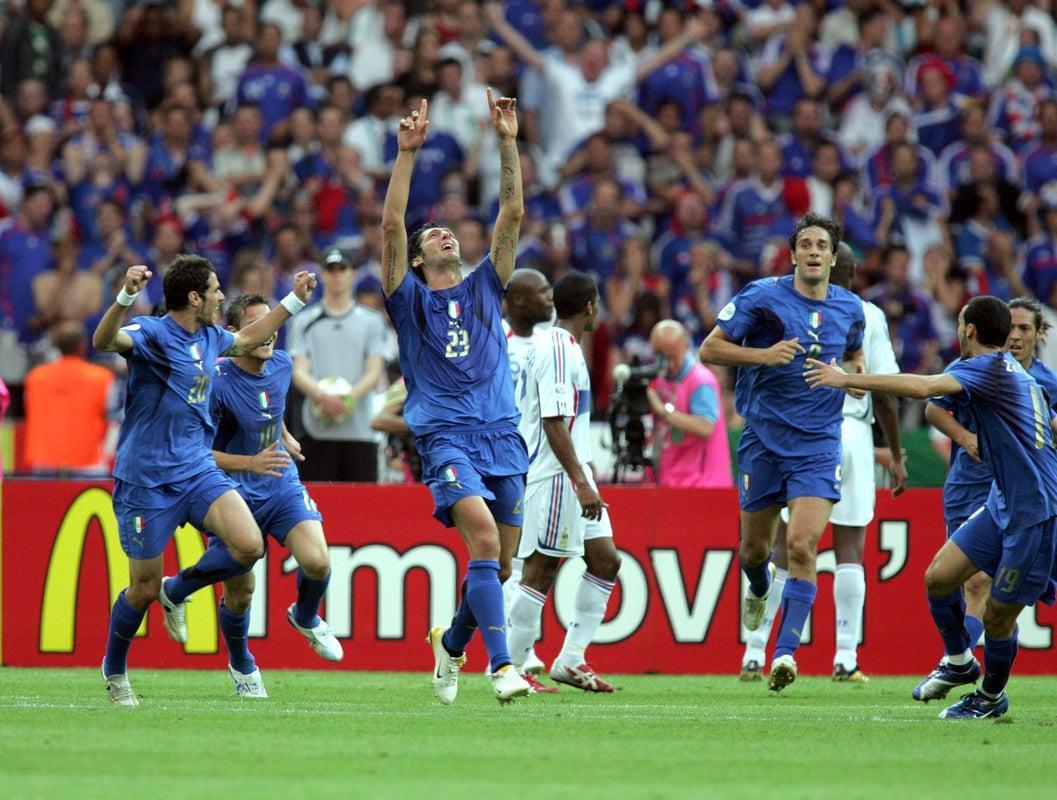
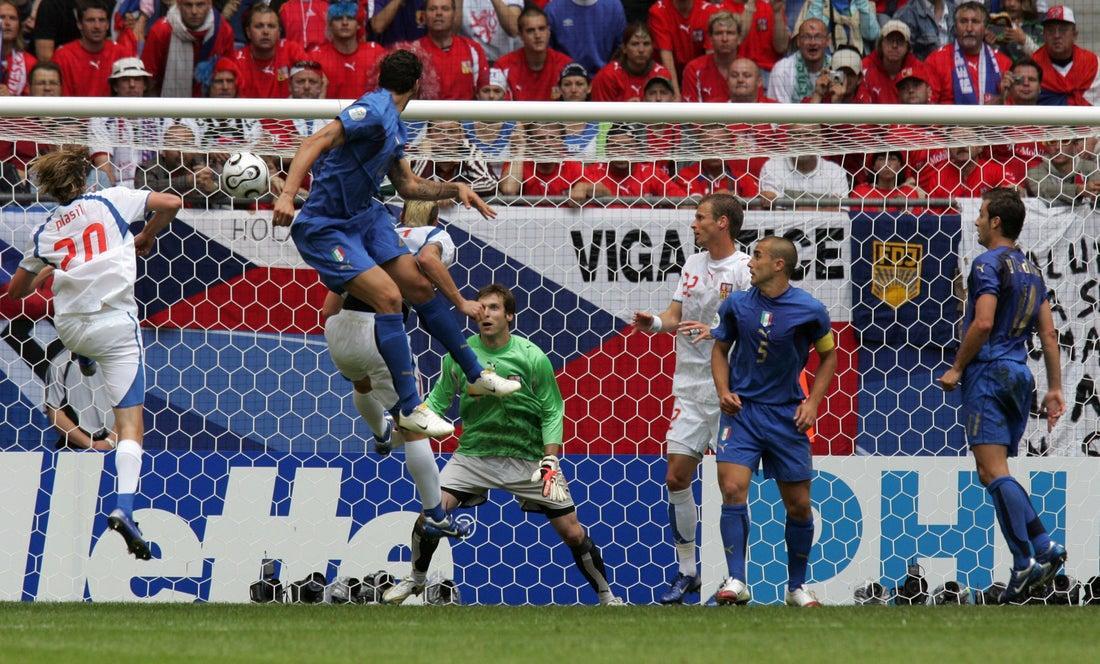
GATTUSO AND ZIDANE. Zidane being sent off in the Berlin final came from him being scolded…by Gattuso: “When Buffon made that save on Zidane’s header, Rino wanted to kill me because I hadn’t marked him. I was actually marking Trezeguet, but with Rino, sometimes it was better not to argue about what happened. A little later, in the same situation, I held him by the shirt. I wanted to make sure he wouldn’t jump. I apologised twice, and the third time he said, ‘If you want my shirt, I’ll give it to you later,’ I said something to him something… but nothing any more serious than what we used to say as kids when we played on the seafront in Bari.” Materazzi’s World Cup was an emotional rollercoaster. It began when he replaced the injured Nesta in the third group-stage match against the Czech Republic. Corner kick, a powerful header, and the ball in the net, a goal very similar to the one he would score against France: “That one was more important than the one in the final because it meant we avoided facing Brazil. We took a slightly easier path, which brought us momentum along the way. By the time we played Germany, we felt invincible. I dedicated that goal to my mother. In the next match against Australia, I was sent off, and some said the magic was over. In the final, the opportunity came again, and with the jump, someone helped push me up. I thought of my mother. But I have to say, the only thing that really shone in the Berlin stadium was my wife and kids, and that’s something special to share.
IN RINO’S HANDS. Since the 2006 World Cup, the Italian national team hasn’t made it past the group stage. There have been two early knockouts in South Africa and Brazil, and two failed qualifications in 2018 and 2022. Later this month, Italy will face the play-offs to secure a spot for next summer in America, relying on another world champion: “All I know is that Rino will fight tooth and nail to take us to the World Cup. He took on the toughest role he could, as direct qualification was practically lost. He’s trying to pass on his enthusiasm to the team. We won’t be facing the strongest of teams, but they’re tough nonetheless, so he needs to make sure the players stay calm. There will be a lot of pushing, and I’m convinced he’s working with the utmost professionalism. The most important thing is to come in ready for these two very difficult matches.”